
Most of you have seen pus oozing out of a broken pimple or an injured place in the body. An excess of this pus always indicates an infection that you need to take care of immediately.
However, it’s also a sign that your immune system is actively fighting by releasing white blood cells to the target site if it notices a virus, bacteria, or any pathogen.
But what if you find pus cells in urine? Are they normal? Or do they indicate an underlying medical condition? Let’s delve deeper into this guide.
What Are Pus Cells in Urine?
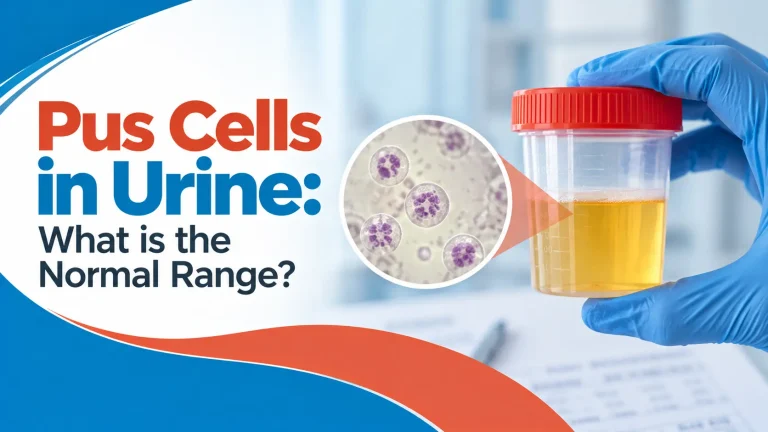
Pus cells are just white blood cells. Your body gets rid of these whenever it has to fight something off. The appearance of pus cells in your urine means there’s some trouble in your urinary tract. The problem could be in your kidney, bladder, or urethra.
This is termed pyuria, and it can be determined from a simple urine test. It is often one of the first tests ordered when someone shows up with a burning sensation while urinating.
A few pus cells floating around are not a red flag. Your urinary tract was never meant to be completely germ-free, so a small amount of immune activity is normal. What matters is how high the number goes.
What is the Normal Range of Pus Cells in Urine?
Probably the most searched part of this topic, and lab reports do a poor job explaining it. The normal range for pus cells in urine is reported as a high power field, shortened to HPF on most reports. That just refers to the view a lab tech sees through the microscope.
| Pus Cell Count (per HPF) | What It Usually Means |
| 0 to 5 | Normal. Seen in healthy men, women, and kids. |
| 6 to 10 | Slightly high. See your doctor if you also have any other symptoms. |
| Above 10 | High. Usually a UTI, a kidney issue, or something that needs a closer look. |
If your number stays above 10 per HPF and you also have signs of a urinary tract infection, don’t ignore it. This table is a starting point, not the full answer. Let your doctor look at the number alongside how you actually feel.
Sterile vs Non-Sterile Pyuria: What’s the Difference?
This part rarely gets explained to patients. Raised pus cells do not always mean bacteria are the culprit.
When pus cells are seen, and the culture shows bacteria, it is called non-sterile pyuria. That’s your classic bacterial UTI, and antibiotics usually clear it up quickly. Sterile pyuria is the one exception.
Pus cells show up, but the culture comes back completely clean. No bacteria anywhere. This could mean you have a viral infection, kidney stones, a disease called interstitial cystitis, tuberculosis affecting your urinary tract, or an autoimmune disease. But most often, the cause is recent antibiotic use, which clears out the bacteria.
This makes sense because antibiotics can’t kill bacteria that are no longer there. If your pus cells do not decrease despite a negative culture, then do not insist on repeating the same medication; see an expert.
What Leads To High Pus Cells In Urine?
Urinary tract infection is the most common cause of pus cells in urine. The bacteria get into your body via the urethra and travel upwards. There could be instances where the infection becomes so serious as to infect the kidneys, which is known as pyelonephritis. Other important aspects include:
- Sexually transmitted infections, such as chlamydia and gonorrhea. These can raise pus cells even when there is no typical UTI involved.
- Kidney or bladder stones. They irritate the lining enough on their own to bring on white blood cells, infection or not.
- An inflamed prostate in men. It sits close enough to the urethra that cells can leak through.
- Interstitial cystitis or urinary TB. Two very different conditions, but both can leave pus cells lingering for months with nothing growing on culture.
And then there is the important one that is often overlooked: a messy sample collection. The presence of skin cells or bodily secretions in the specimen jar results in a higher-than-normal amount of cells, which does not indicate your actual condition.
That is exactly why professionals always highlight the importance of collecting a clean-catch midstream specimen.
What Symptoms Are Associated with Elevated Pus Cells in Urine?
Pus cells themselves will not make you feel a thing. Whatever you actually notice comes from what is causing them in the first place.
- Burning or stinging while you urinate
- Running to the bathroom way more than usual, sometimes for barely a trickle
- Urine that looks cloudy or smells stronger than it should
- A dull ache somewhere lower in your belly
- Fever or pain in the back, which can mean things have traveled up toward the kidneys
Of these, burning and going too often usually point straight to a urinary tract infection. More often than not, a plain urine test shows raised pus cells, confirming what those symptoms were already telling you.
How Is a High Pus Cell Count Diagnosed?
Collect the urine specimen using the clean-catch method by washing the area and collecting urine in the middle of the stream, not the first few seconds of it. This lowers the chance of a contaminated sample and a falsely high reading.
The collected urine sample is placed under the microscope and analyzed. The laboratory technician will count pus cells and red blood cells and check for bacteria or any crystals. If a culture is run and bacteria grow, that confirms a bacterial infection.
Urine tests aren’t always the full story, particularly if the infection could have moved beyond the bladder. That’s where a few blood tests come in.
- Complete Blood Count (CBC): This test looks at your white blood cell count. That often increases when your body is fighting something off.
- C-reactive protein (CRP): A blood test for inflammation that is useful if you suspect an infection but are not sure about it.
- Kidney Function Test: This test is used to check how well your kidneys work. Helpful when symptoms indicate that the infection might have gone past the bladder stage.
Imaging, an ultrasound or a CT scan, comes up far less often. Usually only when stones, TB, or some structural issue is present.
How Is a High Pus Cell Count Treated?
There is no set treatment method; it depends on the test results. If bacteria are present in the culture, the patient will be prescribed antibiotics for that particular bacterium.
The doctor may suggest drinking more water because it helps flush toxins from the body. They may also prescribe medications and painkillers to relieve fever symptoms.
But if the underlying cause is not due to any kind of infection, such as kidney stones, prostatitis, or interstitial cystitis, then the treatment method may vary.
How To Naturally Avoid Pus Cells in Urine?
Most of it comes down to basic, practical everyday habits.
- Have sufficient water intake to maintain light-colored urine
- Avoid holding the urine for a long time; simply urinate as soon as you feel like it
- Wipe front to back, and urinate after sex; this one matters more for women
- Consuming cranberry products and taking probiotics may help prevent UTIs; However, they cannot replace antibiotics, especially once you have been diagnosed with the disease.
- It is advised that you avoid foods containing caffeine, alcohol, and spices, as they can contribute to bladder irritation.
These methods will not substitute for antibiotic treatment in case of infection. Moreover, if the infection is caused by sterile pyuria as a result of kidney stones, tuberculosis, or any autoimmune disorder, treatment may prove ineffective.
When Do You Need To Visit The Doctor?
Some situations that should never be put off.
- Pain during urination that lasts more than one day
- Cloudy appearance or bad smell or blood in urine
- Fever or chills or pain in your back or sides
- A report showing pus cells above 10 per HPF, even if you otherwise feel completely fine
- Pus cells that just will not budge on repeat tests, even after you finish your antibiotics
A urologist, or even your regular doctor, can recommend the right follow-up tests and help pinpoint what’s actually driving the raised count. In case you need a professional opinion on the matter, the urologists from Wockhardt Hospitals will be able to take you through the process.
Important Things to Know When You Find Pus Cells in Urine
It can be scary to see pus cells in your urine report. This condition can be easily resolved once you identify the cause. A normal level of pus cells in the urine is good, and even if the level is high, there is nothing to panic about since further examination can be done.
To keep your urinary tract healthy, you need adequate hydration, good hygiene, and regular checks.
But if you have observed any extra levels of pus cells in your urine with pain, burning sensation, urgent urination, and fever, it is advisable to see your doctor.
Frequently Asked Questions
1. What should be the normal range of pus cells in urine?
Generally, the range is supposed to vary from 0 to 5 per high power field (HPF), but sometimes the value may exceed 6-10 per HPF and still be considered normal. Please note that “normal” is not the same for all people. The value may differ for men, women, children, and it can depend on the laboratory techniques used in your institution.
2. What does it mean to have many pus cells in urine?
Most of the time, a high number points to an infection somewhere in your urinary system, a UTI. That said, it isn’t always the answer. Other things can push the count up too, such as kidney stones or prostatitis.
3. Would pus cells in the urine clear out themselves?
Yes, sometimes. A slight elevation because of dehydration and irritation can be resolved with increased water intake. However, this is not the case if there is an infection because that needs proper treatment.
4. Is a high pus cell count associated with urinary tract infection?
Not always. A urinary tract infection is by far the most common cause. Still, kidney stones, prostatitis, interstitial cystitis, or even a poorly collected sample can raise the pus cell count without any bacteria being involved.
5. How is a high pus cell count in urine treated?
It completely depends on what is causing it. Bacterial infections get antibiotics. Stones, prostatitis, and other non-infectious causes each get their own specific approach, not one blanket treatment for everything.
6.Is a slightly elevated pus cell count something to worry about?
Not usually, because if it is just a slight increase from normal levels and you are perfectly healthy, you really don’t need to be scared. Still worth mentioning to your doctor, though, especially if it comes back later or you start feeling unwell.


