Latest Heart Care Articles | Wockhardt Hospitals

ARTICLES ON Heart Care

Latest Articles on Heart Care

83-Year-Old Woman Suffering From Heart Attack Successfully Treated With TAVR Procedure

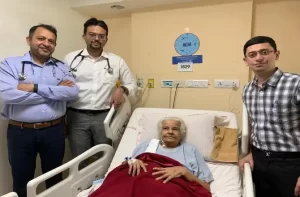
A team of skilled doctors consultant interventional cardiologists Dr Ankur Phatarpekar, Dr Haresh Mehta, Dr Kayan Siodia alongwith cardiothoracic surgeon Dr Mangesh Kohale , interventional radiologist Dr Bhavesh Popat, anaesthetist Dr Neeraj Barnwal, physician Dr Brajesh Gupta and Consultant Physician Dr Zaheer Virani successfully treated an 83-year-old woman suffering from a heart attack. She got a new lease of life through a minimally invasive, life-saving procedure called Transcatheter Aortic Valve Replacement (TAVR) wherein a Third Generation Leak-Proof Valve was placed high up in the heart to regulate the obstructed blood flow to the heart, which improves the survival chances of the patient. 83-year-old Dnyaneshwari Swami, a resident of Mumbai suddenly encountered chest pain and shortness of breath. The family panicked and admitted her to Wockhardt Hospitals in Mumbai Central wherein she was diagnosed with a heart attack. Doctors carried out Angioplasty and saved her life. Dr Ankur Phatarpekar said, “On arrival, the patient underwent, ECG & 2DEcho where it was revealed that she suffered from a heart attack and one of her three arteries of heart was occluded (occlusion means the partial or complete obstruction of blood flow in a coronary artery). The patient also had other co-morbidities such as low blood pressure and kidney problem. The blood clot was removed using aspiration, and the affected session was treated using a drug-eluting stent, and she took about 7 days to recover completely. During the 2DEcho it was also found that the patient had severe Aortic Stenosis (that is a narrowing of the aortic valve opening). It restricts the blood flow from the left ventricle to the aorta and may also affect the pressure in the left atrium (one of the four chambers of the heart, located on the left posterior side) with heart-pumping of 35 per cent.” Instead of performing high-risk open-heart surgery, a novel transcatheter aortic valve replacement (TAVR), was carried out to aid the normal function of heart valves. “TAVR is a minimally invasive procedure to replace a narrowed aortic valve that fails to open properly (aortic valve stenosis). It is a boon for the patients who are not candidates for other treatment options because of their age, overall health or other medical issues. The goal of TAVR is to implant a new, artificial valve to take over the job of the damaged aortic valve,” explained Dr Phaterpekar. Dr Haresh Mehta added, “A catheter was used to manoeuvre and place the new Third Generation Leak-Proof Valve, which slips inside the old valve. Once placed, the new valve expands and pushed the damaged valve parts out of the way and regulated the blood flow into the aorta. The shallow implant of the valve was carried out, placing it high up due to the lack of calcium in the patient. Third Generation Leak-Proof Valve is the first-of-its-kind valve used in Western India at Wockhardt Hospitals. It helps improve the survival rate of the patient. Normally in such cases, there are 15 per cent to 20 per cent, chances of causing death.  With the help of new technology, chances have come less than 1 per cent.” The procedure took about 45 minutes.  “In this procedure, there is only a small puncture instead of a large incision and it is less painful. There are a minimized hospital stay and a speedy recovery. In three days, the patient could breathe easily, and her co-morbidities have been tackled,” said Dr Phaterpaker. “After I suffered a heart attack, I was immediately rushed to Wockhardt hospitals. Since my family was aware of the symptoms, I could receive timely treatment.  I thank the doctors and the team at Wockhardt Hospitals for helping me get back on track,” concluded patient Dnyaneshwari Swami.

Read More

A Minimal Invasive surgery for mitral valve in Heart

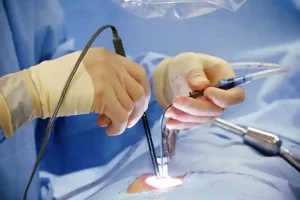
A minimal Invasive surgery for mitral valve in heart was successfully performed on 2 patients at Wockhardt Hospitals Mumbai Central. Minimal Invasive Surgery is rarely done in Mumbai but it is widely known to overall world. Mumbai: A team lead by Dr. Mangesh Kohale, Cardio Thoriac Surgeon at Wockhardt Hospital, SOBO performed a minimal invasive surgery for 2 patients; 65-year-old Ms Ridhhi Shah (Name Changed) and 56-year-old Mr. Ganesh Tare (Name Changed). Minimal Invasive Surgery is a newer form of heart surgery in India. It is a relatively new and advanced technique of performing coronary bypass for the treatment of coronary heart diseases. In this technique, the heart is approached through the side of via a small 4- 6 cm incision. This cut is placed just under the nipple. The chest is entered between the ribs without cutting any bones and by splitting the muscle. Ms. Riddhi Shah (name Changed) had a complaint of breathlessness. An 2decho was done which revealed mitral valve disease hence advised replacement treatment. Dr Mangesh Kohale and team performed minimal invasive mitral valve replacement surgery with a 6cm small incessive below right side of the chest. Whereas a 56-year-old Mr. Ganesh Tare (Name Changed) had a severe chest pain from last 2 months and critical 90% blockage of main artery. Similarly, Dr Kohale performed minimal invasive bypass surgery from left side of the chest with 6cm incision. The number of elderly patients undergoing coronary artery bypass surgery (CABG) and valve replacement continue to increase. In both the case Dr Kohale have performed minimal invasive surgery which is new in Mumbai. Minimal Invasive surgery is not for each and every patient, one has to be very choosey while selecting the patient as there is a very small area to look inside heart and regarding job done, Selection of patient is most important. As of now 15-20% routine surgery patients can be done with minimal invasive surgery later it might increase. Dr Mangesh Kohale, Cardio Thoriac Surgeon at Wockhardt Hospitals in Mumbai says “Minimally Invasive Cardiac Surgery has several advantages over the traditional technique such as the fact that no bones are cut. It has advantages in reducing pain, and a patient can live back to normal life including driving or other activities, blood loss is almost negligible eliminating blood transfusion in most and eliminating blood borne infection. This makes the procedure ideal in diabetics and older patients who have poor resistance to infection.” A cardiac surgery in India that was conventionally non-cosmetic is getting cosmetic with an incision of just 5–6 cm. All these benefits, put together, make for very short hospitalizations and recoveries. The best part is that all the blocks, irrespective of their location in the heart, can be bypassed in a safe and predictable manner.” Adds Dr Mangesh Mr. Ganesh Tare Patient says, “We are happy with minimal invasive surgery. We are back to our routine life with less pain. We are thankful to Dr. Mangesh who explained us procedure and made us understand pro and cons of surgery.” Source : http://www.newspatrolling.com/a-minimal-invasive-surgery-for-mitral-valve-in-heart-was-successfully-performed/

Read More

Quick intervention of Peripheral Artery Disease – saved 65yr old patient

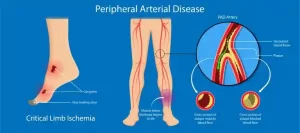
Peripheral artery disease (PAD) primarily occurs, due to decreased blood flow to the limbs caused by a blocked artery. This can result in arm fatigue, pain, and weakness, particularly with use. Peripheral Artery Disease is most commonly associated with the legs and feet, although it does include conditions caused by the blockage of blood flow in the blood vessels of both the arms and hands. A 65-year-old patient, who was suffering from upper limb artery blockage in the right arm, came to the Wockhardt hospital, Mumbai Central, with symptoms of numbness and bluish discoloration in his right arm. The patient was also suffering from from diabetes and was on kidney dialysis, post-bypass surgery with multiple health problems. At Wockhardt Hospital Mumbai Central, he was advised colour Doppler and an angiography, to assess his circulation status in his arm. It was, diagnosed that there was severe blockage of the arteries in his hand and blood supply was cut off causing the numbness and discolouration. Arm artery disease is a circulatory disorder where arteries in the arm are blocked or narrowed, unable to carry oxygen-rich blood into the arms. It is caused due to several factors such as high blood cholesterol sedentary lifestyle, diabetes, high BP tobacco and much more. As the disease, develops one may experience bluish discoloration skin. These symptoms are caused by the narrowed arteries inability to supply the necessary oxygen to the muscles. This condition can lead to increased risk of amputation, heart attack, and stroke. Dr. Ravi Gupta, Cardiologist and team at , Wockhardt Hospitals, Mumbai Central with their clinical expertise and quick intervention, performed a limb saving procedure and restored the circulation in the patient’s arm. Dr Gupta revealed “We used hard wires and balloon to open an artery so blood flow started in the palm. In this procedure, it was important to save not only limb but also AV Fistula which is necessary for his regular dialysis.” For information on treatment and management of peripheral arterial disease please visit our vascular surgery department at Wockhardt Hospital.

Read More

All you need to know about Minimal Invasive Cardiac Surgery

What is Minimal Invasive Cardiac Surgery (MICAS)? Minimally invasive heart surgery (also called keyhole surgery) is a newer form of cardiac surgery. In this type of heart surgery, small incisions are done, without dividing the central breastbone or sternum. That means instead of “cutting open the chest” from midline as they do with traditional open heart surgery, a small and cosmetic incisions using specialized instruments is used for procedure. How is the procedure carried out? MICS procedure is carried out through a small 5 cm incision on the side of the chest (mini thoracotomy) without damaging any bones. In females, the incision is under the breast fold making it even more cosmetic. Is MICAS CABG a beating heart operation? Yes, it is an off pump or beating heart operation. The support of a pump may rarely be required but the operation is still performed on the beating heart. Pump support may particularly be used when the heart is weak. What are the Common Indications of the MICAS? : How does it differ from conventional cardiac surgery? What are the contraindications for the surgery? What are the benefits of MININMAL INVASIVE cardiac surgery? What is the risk of infections after MICAS CABG? The risk of infection is close to zero. All infections are reduced dramatically in MICS CABG even in diabetics. It is due to the fact that the incision is small and no bone is fractured. What are the precautions I would have to take after MICS? After minimally invasive heart surgery, you may have an improved quality of life and reduced symptoms. To know more about Minimal Invasive Cardiac Surgery please Visit us at Wockhardt Hospitals in Mira Road Understand all your cardiac conditions with our experienced cardiac surgeons. Dr. Manish Hinduja M.S., M.Ch.(CTVS), D.N.B.(CTS) is a an internationally acclaimed Cardio Thoracic & Vascular Surgeon working as Full Time Consultant at Wockhardt Hospitals, Mira Road. He has over 9 years of experience and has operated more than 5000 cases in his field. He specialises in Minimal Invasive Cardiac Surgery at the hospital.

Read More

Second Opinion