
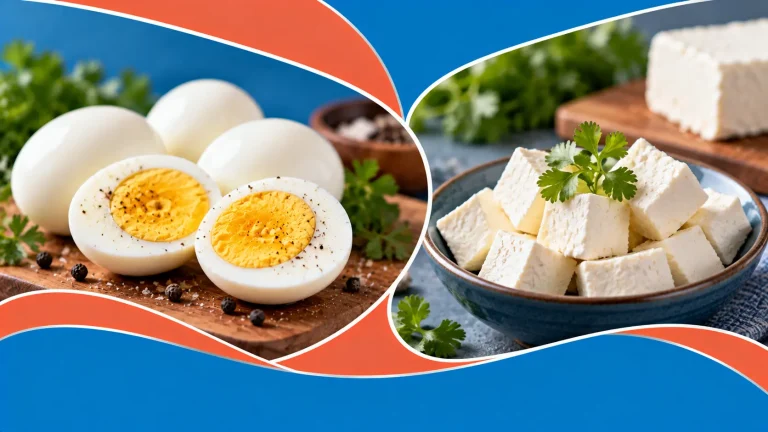
You see two boiled eggs and a serving of paneer on your plate. Someone a week earlier warned you, “Eating both at once gives you too much protein. It’s bad for your kidneys.”
This is a common health myth that keeps spreading at the gym or on WhatsApp. Let’s look at the facts and separate what’s true from the noise.
Can We Eat Paneer and Eggs Together?
Yes. If you’re healthy, eating eggs and paneer in the same meal is fine. No rulebook, chart, or dietitian says you must keep the two off the same plate.
Both are high-quality proteins. Each provides amino acids your body needs for repairing muscle and keeping you moving. When you stack them in one meal, you get a solid portion of protein.
The key is to watch your portions and how you cook them. But as for that scary “do not mix them” story? You can let that go.
Why Does Protein Matter So Much When You Want to Lose Weight?
Here’s what crash diets leave out. Losing weight isn’t just about eating less. It’s about eating smart — and that starts with protein.
Protein digests slowly, keeping you full for hours. It also boosts the hormones that keep hunger in check, so eating a bit less stops feeling like punishment.
There’s also a modest metabolism boost. This is called the thermic effect of food, meaning your body burns a little extra energy just to process the nutrients.
How Does Paneer Help With Weight Loss?
Ask around. Paneer always has its people. And there is a reason for that. It keeps your energy steady, and it leaves you full. That second thing is the real trick. A full stomach does not go wandering to the kitchen an hour later.
But the cooking makes or breaks it. A dietitian at Wockhardt Hospitals keeps it simple. Have paneer daily if you want, but grill it or scramble it. What kills the benefit is the restaurant version, loaded with butter and cream. One bowl of that and there goes your effort.
So, three things to hold on to:
- A little, often, works better than one big heavy plate.
- It’s low in lactose, so some sensitive stomachs manage it better than milk.
- Take it easy. Paneer stays your friend right up to the point you overdo it.
And How Do Eggs Help?
“Sunday ho ya Monday, roz khao ande.” That jingle has a point. An egg is a simple, affordable, and tasty way to get protein that fits perfectly into your weight-loss plan.
So what is happening when you eat one?
- You stay full. Eggs sit high on the fullness scale; for something so small, they keep hunger away for a long time.
- Nothing goes to waste. The amino acids in an egg are balanced so your body absorbs it efficiently.
Egg vs Paneer: Who Actually Wins?
There’s no winner in the egg vs paneer debate. One is light and quick, the other is filling. Choose whichever fits your habits and goals.
|
Nutrient |
Egg (1 large) |
Paneer (100 g) |
|---|---|---|
|
Protein |
Around 6 g |
Around 18 g |
|
Calories |
Around 78 kcal |
Around 265 kcal |
|
Suits |
Non-veg, quick meals |
Vegetarians, heavier meals |
|
Rich in |
B12, vitamin D, choline |
Calcium, phosphorus, protein |
|
Go easy if |
You have high cholesterol |
Fried or with thick gravy |
Notice how one covers what the other leaves out. Eggs stay light and are gentle on the calorie count, while paneer adds more protein. Put them side by side and there is barely a gap left.
So, Both in the Same Meal, Healthier or Not?
If you eat non-vegetarian food, utilizing both is an excellent way to meet your needs.
In fair amounts, eggs and paneer together give you a solid spread of protein, calcium, and vitamin B12. Both digest slowly and help manage your appetite, which supports general fat loss. In your stomach, they aren’t at war; they just quietly do the job.
It lands back on your body and your day. Eggs in the morning and paneer at night? Works. Both together? That works too. Just aim for balance, as even healthy foods should be eaten in sensible portions.
How Much Is Too Much?
Protein is brilliant, but total daily load matters. While healthy kidneys handle a normal plate of both just fine, those with pre-existing kidney disease must be careful. Two eggs (~12 g) plus 100 g paneer (~18 g) is roughly 30 g of protein, well within reach of the ICMR-NIN RDA (about 54 g/day for a sedentary man and 45.7 g for a sedentary woman).
A sensible day, laid out:
- One or two eggs. You can eat them boiled, poached, or scrambled using very little oil.
- Paneer, palm-sized. You can grill or scramble it, but avoid heavy, cream-based gravies.
- Some vegetables and a few whole grains to round it off.
Who Should Go Slow?
Most of us can just dig in. A handful of people, though, want to pay a bit more attention:
- Anyone with kidney disease, since your total protein intake may need to be managed.
- People with heart issues should focus more on saturated fat intake; while dietary cholesterol’s effect is modest for most, you might opt for egg whites and low-fat paneer.
- Anyone with a real dairy allergy, where paneer is simply off the list.
None of that wipes out the good these foods do. It is only about fitting what you eat to your own body, rather than a rule stamped out for everyone in one go.
When Should You Talk to a Doctor or Dietitian?
Specific health needs require personalized advice. Seek expert guidance if:
- Diabetes, kidney disease, or a heart condition is in the mix, and you are unsure how much protein is right.
- You are pregnant or breastfeeding and want the protein planned properly.
- You have decided to lose weight or build muscle and want a plan tailored to your specific goals.
Consulting an expert can clarify your specific nutritional requirements. The nutrition and dietetics team at Wockhardt Hospital in Nagpur can build a customized plan that addresses your unique health profile and lifestyle.
The Bottom Line
Can we eat eggs and paneer together? Yes. For most, it’s a smart move. These are two excellent proteins on one plate that help you stay fuller and support your weight and muscle goals.
It comes down to small portions, light cooking, and a balanced plate. Get that right and you can simply enjoy both. If you have a health condition, talk to a doctor or dietitian first to ensure it fits your needs.
FAQs
1. Can we eat paneer and egg together every day?
If you’re healthy, you can. Just keep the paneer portion sensible and go easy on the oil. If you have kidney disease, heart disease, or high cholesterol, consult your physician first to determine the right protein and fat balance for you.
2. Is egg or paneer better for weight loss?
Neither is objectively “better”; they are beneficial in different ways. Eggs are light, while paneer packs more protein per serving and is a staple for vegetarians.
3. How much egg and paneer should I consume in a day?
A common serving is one or two eggs and a palm-sized piece of paneer, lightly cooked. If you have a medical condition, follow the personalized guidance of your dietitian.
4. Can those who are lactose intolerant eat paneer with eggs?
Yes. Most of the lactose drains off with the whey as the block is pressed, so paneer carries far less of it than milk. It is often well-tolerated in moderation, but observe how your own body reacts.
5. When should you visit a dietitian for protein advice?
Seek professional advice if you have chronic conditions like diabetes or kidney disease, are pregnant or nursing, or want a structured plan for weight loss or muscle building. A dietitian at a hospital in Nagpur can build a plan that actually works for you.


