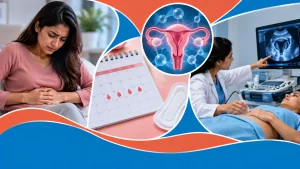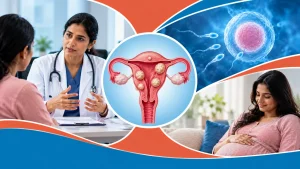
When Fibroid Removal Improves Fertility and When It Does Not
Does taking out the uterine fibroid help you get pregnant? When you are thinking about this decision, that’s the only doubt that actually counts, and you need an honest answer. So here it is. Removal helps some women a great deal. For others, it does nothing, and it leaves a scar besides. What separates those two outcomes comes down to where your fibroid sits and what else might be standing in your way. Let’s understand this. Uterine Fibroid: What It Is A fibroid is a steady knot of muscle and tissue that develops in or on the uterus. It is not cancer. One may stay as small as a seed, while another grows as large as a grapefruit before you notice anything. These happen a lot. As pointed out by the World Health Organization, many women develop uterine fibroids during their reproductive years, and yet do not know about it. Indian clinics report high numbers too, especially in cities. Now for the detail that actually settles your fertility. Not size. Position. Three kinds matter: Submucosal, growing inside the cavity, right where a baby would implant. Intramural, buried in the muscle wall. Subserosal, pushing outward from the surface, away from where pregnancy takes hold. Hold onto these three. Every choice below circles back to them. What Symptoms Fibroids Cause? Often, none. The fibroid symptoms stay silent for years, and you’re none the wiser. Other women feel it wearing them down, bit by bit. Look out for: Heavy periods, or ones that stretch on far too long Bleeding between cycles A dull ache or heavy pressure low in the belly Frequent trips to the bathroom Constipation Pain during sex A nagging lower back Facing issues in conceiving or miscarriages that keep repeating Usually, one of the first clues is heavy bleeding. The catch is how easy it is to shrug it off, blaming it on a rough patch or one strange month. Most of the time, the fibroid remains hidden until the question of having a baby comes up. Why Do Fibroids Develop? No one can explain it. But a handful of things clearly load the dice: Hormones. Hormones such as estrogen and progesterone fuel fibroid development, which is why they are known to get smaller when menopause occurs. Family. A mother or sister who had them increases your risk. Age. Your 30s and 40s are the danger years. Weight. Extra weight drives up the very hormones fibroids thrive on. Diet. Heavy on red meat, thin on greens? That counts against you. How is a Fibroid Diagnosed? Simpler than most patients brace for, and rarely painful. Your gynecologist in Mumbai can pick from any of these: Test What it Does Pelvic exam The doctor feels for lumps or a distended uterus. Ultrasound Sound waves reveal size and location MRI scan A detailed map for large or multiple fibroids Hysteroscopy The inside cavity is examined through a thin camera Saline sonography A fluid is used with ultrasound to sharpen the image. But when it comes to a baby, one question often stands above others. Is the fibroid touching or putting pressure on the cavity? When Does Fibroid Removal Improve Fertility? It tends to help when: The fibroid is submucosal. Parked inside the cavity, it simply gets in the way of implantation. Research on PubMed shows that removing these fibroids raises pregnancy rates and drives miscarriage rates down. It’s bending the cavity. An intramural fibroid pressing inward causes the same trouble, and taking it out can pay off. It’s large enough to crowd nearby organs. A big one may pinch the fallopian tubes or throw the whole shape of the uterus off. Nothing else explains the struggle. When every other test reads clean, and the fibroid is the lone oddity, removal earns a hard look. You’ve lost pregnancies tied to a cavity fibroid. For a submucosal fibroid, doctors often work through the vagina with a hysteroscopic myomectomy. No cuts on the belly, next to nothing to recover from on the outside. When the fibroid is clearly the roadblock, this is one of the cleanest ways to bring fertility back. When Does Fibroid Removal NOT Improve Fertility? This is the half patients almost never hear, and it counts just as much. Surgery promises nothing. Some cases see zero change, and there’s always risk baked in. Don’t bank on a benefit when: The fibroid is small and subserosal. Sitting out on the outer wall, nowhere near where a baby implants, it usually has no say. It never reaches the cavity. A small intramural fibroid that leaves the cavity alone tends to sit there, harmless. The real culprit is elsewhere. Blocked tubes. Egg quality. A sperm problem on your partner’s side. Fibroid surgery fixes none of it. It’s causing no symptoms and sits well clear of the cavity. Then most doctors will simply say, leave it. And here’s the twist people don’t see coming. Surgery can leave scar tissue inside the uterus, and that scarring can drag your fertility down all by itself. So hunting out every fibroid you happen to carry isn’t careful medicine. More often, it’s the wrong call. What Are the Treatment Options? It all depends on your age, what symptoms you have, location of the fibroids, and their size. There is no single fibroid treatment for all. Watchful waiting. Small and quiet? Then doing nothing is a perfectly sound choice. Plenty of fibroids never cause a moment’s bother. Medicines. There are certain medications which help reduce the size of fibroids as well as decrease heavy bleeding. Just bear in mind, however, that this approach is mostly temporary in nature. Myomectomy. This takes out the fibroid but leaves your uterus in place. For women hoping to conceive, it’s the first choice. How the surgeon reaches the fibroid depends on its size and position. Small ones tucked in the cavity often come out through the vagina. Others are reached by keyhole surgery through a few tiny cuts. A very large fibroid may call for