Latest Press Release Articles | Wockhardt Hospitals

ARTICLES ON Press Release

Latest Articles on Press Release

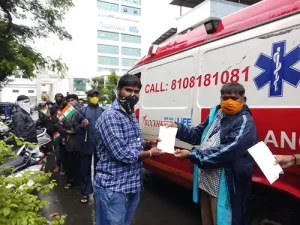
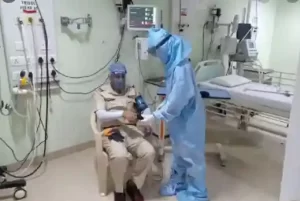
Wockhardt Hospitals, Mira Road Distributed 250 Kits Amongst MBMC Frontline Workers to Create Awareness and Independence From COVID-19

Coronavirus infections are rising and spreading rapidly in the country. To help people fight Coronavirus, the frontline workers are working 24/7 and undertaking unlimited efforts. Wockhardt Hospitals, Mira Road took a unique initiative to spread awareness and independence from COVID-19 and distributed 250 kits amongst Mira Bhayandar Municipal Corporation (MBMC) workers. Dr. Pankaj Dhamija Center head, Wockhardt Hospitals in Mira Road, said: “The frontline workers who provide essential services have been serving the citizens round-the-clock in battling COVID-19. To safeguard their health and prevent Covid 19 amongst them, 250 kits containing a mask, sanitizer and Vitamin C tablet strip have been distributed by the hospital to ensure that these workers stay safe and disease-free.” “As the battle against the pandemic has unfolded, we have been working for the betterment of society. COVID-19 frontline workers have risked not only their lives but their family members also.   Mr. Nitin Khaire Sanitary Inspector said that this move by Wockhardt Hospitals, Mira Road is worth applauding as they have educated us about our safety and all the precautions that are needed to keep COVID at bay. We thank the hospital for coming forward and doing its bit during these unprecedented times. Source: https://www.apnnews.com/wockhardt-hospital-mira-road-distributed-250-kits-amongst-mbmc-frontline-workers-to-create-awareness-and-independence-from-covid-19/

Read More

World Hepatitis Day: 28 July, 2024

As the world continues to battle with the COVID-19 pandemic, it is easy to overlook the grave realities of various other global epidemics that still plague the society in the background. A staggering 900,000 fatalities are caused by the hepatitis B infection every year, leading the World Health Organization (WHO) to raise awareness about the life-threatening virus that continues to raise havoc. However, despite the campaigns and the conscious effort to bring about a change, the world struggles with the lack of awareness, which is perhaps a bigger problem than the infection. What is Hepatitis? How is it Diagnosed?  According to WHO, there are positive main strains of the hepatitis virus – A, B, C, D and E, of which hepatitis B and C are considered to be a common cause of death. The infection contributes to 1.3 million fatalities every year.  “Hepatitis is swelling of the liver. It can be caused by varied causes like viral infections, fatty liver, toxin like alcohol, drugs, autoimmune, congenital,” says Dr Keyur Sheth, a gastroenterologist at Apollo Spectra Hospital in Mumbai. “Viral infections like hepatitis A, hepatitis B, hepatitis C, hepatitis E can commonly cause hepatitis. The most common modes of transmission are blood transfusion, needle prick of infected individuals, tattoo piercing, sexual transmission,  or mother to child transmission,” he adds.  United we stand Keeping in mind this year’s theme, ‘Hepatitis-free future’, the WHO has called upon countries to join hands in defeating the virus by 2030. Urging united effort, the WHO has come up with a positive step agenda to eradicate hepatitis infection: Prevent infection among newborns. Stop transmission from mother to child Leave no one behind Expand access to treatment Maintain essential services during the COVID-19 outbreak Emphasising the importance of early detection of hepatitis in children, Dr Atish Laddad, a leading Pediatrician, Founder & Director at Docterz talks about how the infection can be tackled within six months of contagion. “Mostly in children, these infections tend to get cleared up within a span of 1 to 2 months with no treatment required. But if not detected early (within 6 months) in children, the virus tends to multiply gradually and remains in the body leading to slow yet progressive damage,” he tells  Sakal Times . “If not detected on time, it can lead to a state called chronic carrier state. Hence for early detection, it is prudent to get your child tested. Children born to an HBV positive mother must receive an H-B-I-G shot and the hepatitis B vaccine dose within 12 hours of birth,” he adds. Myths & Facts  On account of World Hepatitis Day,  Sakal Times  spoke to Dr. Pratik Tibdewal, a Consultant Gastroenterologist at Wockhardt Hospital, Dr. Roy Patankar, leading Gastroenterologist & Director of Zen Multispecialty Hospital, and Dr. Akash Shukla, Senior Hepatologist, Global Hospital to clear common misconceptions concerning hepatitis.  Myth 1: Hepatitis B is Not Treatable  Some types of hepatitis tend to go away on its own. Sometimes, it progresses to liver cirrhosis (scarring of the liver). Patients will have to take rest and bid adieu to alcohol while recovering from it. Doctors may prescribe interferon (antiviral agent) to tackle Hepatitis C. Another myth is that hepatitis is a hereditary or genetic disease. The fact is that it is not inherited or genetic disease. hepatitis B is generally contracted from mother to child during birth. Thus, giving immunoglobulin can help prevent it. Myth 2: Herbal or Natural Products Can’t Damage the Liver Many drugs and products are associated with the development of hepatitis. Some drugs used for TB, Epilepsy, rheumatoid arthritis, heart arrhythmias and pain-killers can cause hepatitis. Similarly, many Chinese herbal products, unauthentic, impure or contaminated ayurvedic drugs, local medicines or inappropriate herbal products can cause hepatitis. Myth 3: All Hepatitis Infections Are Life-Threatening Yes, but the fact is that the infection may not kill anyone. Many people are suffering from hepatitis infection and are leading a healthy life. So, do not fret and opt for appropriate treatment. Another myth is that hepatitis B tends to spread by touching, coughing, and sharing utensils. Let me tell you that the fact is that it spreads when body UID from an infected individual enters another through sex, pricking, or even transfusions. Also, some say that hepatitis and jaundice are the same. Not, the fact remains that the jaundice is just the symptom of hepatitis. Myth 4: I Don’t Drink Alcohol and I Only Eat Good Food. So, I Am Not Prone to Hepatitis There are several causes of hepatitis other than alcohol. Hepatitis B, Hepatitis C, non-alcoholic fatty liver disease, auto-immune hepatitis, Wilson’s disease etc. These are some examples of hepatitis which can occur in people who don’t drink or maintain a good diet. Myth 5: Fatty Liver on Ultrasound is Not Important and Can Be Ignored Presence of fatty liver on ultrasound means metabolic imbalance. It should be immediately evaluated by an expert to see if there is damage in the liver and also if there are other associated features like obesity, diabetes, blood pressure, heart disease, lipid problems (cholesterol), snoring etc. It should be promptly treated and change in lifestyle is often warranted. Source: https://www.sakaltimes.com/lifestyle/world-hepatitis-day-2020-building-hepatitis-free-future-53879

Read More

After 12 Surgeries Over 25 Years, 57-Year-Old Woman Walks Freely Again at Wockhardt Hospitals

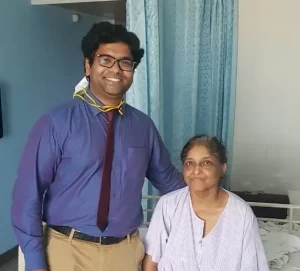
After 12 Surgeries Over 25 Years, 57-Year-Old Woman Walks Freely Again – Apeksha News Mrs. Linda R. Kotak, a 57-year-old lady, came to consult with Dr. Girish L. Bhalerao at Wockhardt Hospitals, Mira Road about one month ago, for Recurrent Dislocation in her Left Hip joint that was operated elsewhere about 25 years ago. The patient is able to move freely after 12 failed surgeries Over 25 years. After thorough history taking it was understood that the patient had symptoms of Avascular Necrosis(AVN) of Left Hip for which she was operated with a surgical procedure called Core Decompression in 1995 at her young age of 30 years. However, it did not succeed in reestablishment of the blood flow to the Femoral Head and had to undergo Left Total Hip Replacement in 1996. The Hip Prosthesis, in accordance to availability to those times, was all-cemented First Generation Charnley’s Implant of Metal on Poly type (metal head with polyethylene cup) – monoblock design. In comparison to today, this was a very initial design without any modularity. However, the same disease pathology of AVN affected in progressive manner to Right Hip as well and patient had to undergo Right Total Hip Replacement, elsewhere with a different doctor – this time with an uncemented method in 2005. However, her gait was not symmetrical and due to inadequate posture training, she occasionally required stick/ walker support to balance her gait using upper limbs. This caused further injuries to her in form of Right ankle fracture (required Surgery – 2017) and Rotator Cuff Injury of Left Shoulder (required Surgery – 2018). Furthermore, this unbalanced gait and abnormal posture put a lot of stress on her spine and her knees. She was operated on Lumbosacral spine in 2018 & Dorso-Lumbar Spine in 2019. She underwent Bilateral Knee Replacement in 2019. After such extensive treatment journey, her troubles did not end and she got recurrent dislocation of her Left Replaced Hip from February, 2020 onwards. After having 5 episodes of such dislocation, which required hospitalization each time, the patient decided to consult with Dr. Girish L. Bhalerao – Super Specialty Consultant Orthopaedic and Spine Surgery at Wockhardt Hospitals in Mumbai. After detailed examination he advised her a Revision/ Redo of the Total Hip Replacement, in July after the lockdown would be lifted due the ongoing Corona Pandemic.  However, on !6th June, 2020 she again dislocated her Hip while in bathroom and suffered from unbearable pain. She immediately shifted to Wockhardt Hospitals, Mira Road and her joint was reduced/ relocated in Emergency Department, however with slight movement it again used to dislocate. Due to recurrent dislocations, the adjoining stabilizers (joint capsule, muscle tendons, ligaments) of her Left hip had taken injuries and she got a completely unstable Hip. “Any Joint Replacement procedure revolves around the principle of stability and mobility with perfection in tissue balancing to restore the normal bio-mechanical axis of the joint. A complete unstable Hip, post THR, is a very rare complication which requires a high precision and skill set to operate with appropriate logistic support in terms of high modular dual mobility/ constrained implant availability”, said Dr. Girish Bhalerao. While enquiring about the challenges faced during surgery, Dr. Bhalerao said, “The cementing technique applied by the previous surgeon was impeccable and he did a very nice job, considering the availability of instruments and logistic support at that time. However, this created lot of difficulties for me during implant removal and complete excision of remnant cement with such delicate weak bone tissue of hip joint. With lot of patience, precision techniques like Extended Trochanteric Osteotomy and help of the latest instrumentation the job was completed. Following this, the next challenge was tissue balancing as the trial implants were also unstable owing to complete laxity of tissues. I had to use the latest Design of Constrained Total Hip Replacement respecting the anatomical dimensions to replicate the physiological bio-mechanical axis and decided to perform total cement-less method for better future outcome in terms of acceptability of implants.” The patient was mobilized full weight bearing immediately the next day and was discharged within 5 days. Post-operative physiotherapy and Rehabilitation is tolerated well and is showing steady progress in term of full weight bearing functional gait with minimal support and ability to perform all her activities of daily living independently. Being an avid traveller, soon the patient is willing to plan her favourite tourist destinations. A joyous patient Linda Kotak said, “After 12 failed surgeries, I had lost hope. I never believed that I will be able to stand on my feet. But, Wockhardt Hospitals turned my dream into reality. I can live my life the way I want to without depending on anyone.” Source: https://apekshanews.com/after-12-surgeries-over-25-years-57-year-old-woman-walks-freely-again

Read More

Not out at 64: After spending 35 days in ICU at Wockhardt Hospitals, Mumbai Central, A retired cricket scorer recovers from COVID-19
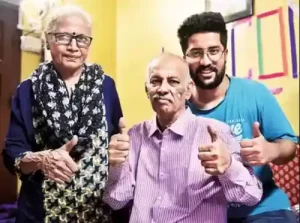
Thirty five days after a COVID positive man was admitted to hospital, the 64-year-old walked out of the hospital a recovered man. On June 12, the family of Parel resident Ramesh Parab, was running from one hospital to the other as he was gasping for breath. His oxygen saturation level had dropped to 50 per cent, where it should be between 94 to 100 per cent. With no ICU beds available in three hospitals, the family finally managed to get a bed in Bombay Central’s Wockhardt hospitals. Parab was straight away taken to the ICU and put on ventilator. The former BCCI match scorer was diagnosed with Covid-19-related pneumonia with Acute Respiratory Distress Syndrome (ARDS) and sepsis with acute kidney injury and multi-organ failure. The treating doctors from Wockhardt Hospitals informed the family that with such severe cases involving multi-organ failure, chances of survival is very low. That’s why when he was discharged from the hospital on July 17 almost after 35 days, even the leading doctor, Dr Kedar Toraskar and other members of the medical team burst into applause. Parab broke down when he saw his wife, son and daughter. “For the first 10 days of his hospitalisation, I used to tell his family members that we are trying our level best, but chances are weak,” said Dr Toraskar, pulmonologist and critical care expert at Wockhardt hospitals, who is also a member of the state task force committee. “Frankly speaking, even I thought at one point that he might not make it, but we never gave up, his creatinine level was high so he was put on dialysis. We also gave him Remdesivir, Tocilizumab, steroids, and antibiotics,” added Dr Toraskar. It was only after 15 days of being put on ventilator support that Parab started showing an improvement. Not many critically ill Covid-19 patients have been as fortunate as Mr Parab. For the first three months of the pandemic, almost 80 to 90 percent patients in such a critical condition had died, according to Dr Toraskar. The worldwide estimated mortality rate is 80% for moderate to severe Covid-19-related ARDS. On July 17, Parab was discharged directly from the ICU, after 35 days. Parab’s 28-year-old daughter Neha who works as a technician in the same hospital said, “I visited him thrice in the ICU, wearing a PPE. It was painful to see his condition. But the staff told me not to lose hope. I am thankful to the entire team of ICU and doctors who saved my Baba’s life,” she said. Even though he has been discharged, it is still a long road ahead to complete recovery. He will soon start physiotherapy.When Parab reached his home in Vishwas Niwas building in Parel on July 17, his neighbours welcomed him back, calling him a fighter. His family cut a cake to celebrate his return. “I survived today thanks to the doctors and all the support staff in the ICU. I got the motivation to survive from them, especially from young nurses working day and night taking such good care of each and every patient,” said a grateful Parab. “My family too never gave up on me. My daughter kept motivating me, saying, ‘Baba, you are a warrior. We’ll go home soon’,” added Parab. Source: https://mumbaimirror.indiatimes.com/coronavirus/news/not-out-at-64/articleshow/77210485.cms

Read More

THERE WILL BE AN ANSWER, LET IT BE

Sometimes, the hardest thing to do is to do nothing. This is true for the Queen of England, and neurosurgeons with the latest technology and research at their fingertips. If this was your father, what would you do?” I asked a few members of my team in an exercise I regularly indulge in to evaluate decision-making. A 78-year-old previously healthy man had come in with a large hypertensive haemorrhage in his brain that had left him mute and paralysed on his right side. He was in a coma partly because of the location of the bleed, but also because of the pressure it was creating. We could remove the clot and that would probably save his life, but it was unlikely to alter his overall condition. He could be on a ventilator for weeks and discharged home on a tracheostomy, but would still need months, if not years, of 24/7 nursing, continuous physiotherapy, being fed from tubes, and made to pass urine via a catheter – condemned to an existence of meaningless metabolism he would probably never have wanted. If he made a meaningful recovery after all, he would probably still be dependent on others for his daily needs, doomed either way. “I would do whatever it takes to save him. I can’t live with the guilt of doing nothing, especially if there is a small chance of him making recovery,” appealed the senior resident unequivocally. I turned my eyes to the next person, someone who loves to rattle off numbers, who substantiated, “Literature suggests that in such cases, long-term functional independence is achieved in about 10–30 per cent cases, with mortality rates of 60 per cent at one year. Unfortunately, these numbers do not help me decide.” “It’s easy to make a perfect decision with perfect information. Medicine asks you to make perfect decisions with imperfect information,” I recalled having read an essay by Siddhartha Mukherjee. I stared into the eyes of the junior-most member of the team. “If this was my father, I would not do anything, just keep him comfortable,” he adjudicated matter-of-factly. “Why?” I queried, ragging him with “is it because you don’t know what to do?” Years of training in medicine makes you tough. And when you’re on the other side and in charge, you need to ask tough questions even when you’re all sailing in the same boat of uncertainty. “If he passes away, he passes away. If he survives, my family does not have the means to support full-time nursing over a long period. And I’m pretty sure that seeing him like this for months is going to be demoralising for everyone at home, leading to fights, discord, and a perpetual state of unpleasantness. He’s led a full life. I don’t think we should mess with nature.” Sometimes the most unassuming people take the most practical decisions, I thought to myself. “Who are we to decide? Place the data on the table in front of the family, with the pros and cons of each approach, and let them take a call,” proposed another, concluding the discussion. It is easy for a surgeon to present published data in a manner that goads a patient and their family to make the decision that the surgeon wants them to. You can either speak with compassion or incite fear, especially if it’s a question of surgery at a time of emergency, when relatives are emotional and unable to think rationally. But it is the surgeon’s responsibility to help them make the decision that’s right for them. In such situations, after I explain things to the patient’s family, I always end the discussion with the golden, reassuring words my mentor used to say: “Whatever decision you take will be the right decision for you and your loved ones.” Who are doctors to decide who will survive and who won’t… but subconsciously, we make these decisions all the time for patients and their families. What is important when doing so is to keep one’s own biases and opinions aside, and present things in a rational and unemotional way to relatives. “When there’s no place for a scalpel, words are the surgeon’s only tool.” Paul Kalanithi sighed in his heart-wrenching memoir –When breath becomes air. It’s the same thing with grade 4 brain cancer. If you don’t carry out any surgical intervention, survival is three to six months. If you operate and offer radiation and chemotherapy, survival can be one to two years. Of course, there are outliers who will survive a little longer, but would you offer the option of surgery to someone who has to sell his land or only cow, and have him exhaust all savings just to have them spend the rest of their lives between home and hospital? Even affluent people who can easily afford the whole works would think twice before opting for expensive and emotionally depleting treatment options that may or may not yield results. It is not our circumstances that make us or decide our fate, but the way we respond to them.“There is nothing good or bad,” as Shakespeare wrote in Hamlet, “but thinking makes it so.” The relatives of the gentleman with the hemorrhage didn’t opt for any aggressive treatment. He passed away three days later. While that week must have been full of turmoil for them, the son came back a month later to simply say, thank you. Source: http://www.mazdaturel.com/there-will-be-an-answer-let-it-be

Read More

Wockhart Hospitals, Mira Road conducts free health check-up for Mumbai Police

With the country grappling with the spread of coronavirus cases, every effort is underway to try and stem this. The lockdown is one way to try and curb the spread of Covid-19 and police are also working round-the-clock, to ensure that the lockdown rules are being followed by the people. To help the cops in their duty and ensure they stay fit, Wockhardt Hospitals, Mira Road, in association with Nayanagar police station at Mira Road, conducted a free general health check-up in Mira Road  drive for these officers. In this one-time activity, around 20 police officers (over the age group of 50+) were screened. They received a check-up from a physician as well as RBS, BP, temperature monitoring and ECG were done. Says Dr Pritam Moon, Internal Medicine Consultant of the hospital, “Due to lockdown, police are on duty and taking continuous care for us and our safety. Our hospital has supported an initiative as a CSR responsibility and more than 15 police personnel came for the screening of BP, ECG, and regular check-ups.Adding a note of appreciation, police inspector Kailas Barve, “It was a great pleasure to have a support of Wockhardt Hospitals in Mira Road to help us with screening check-up. In our daily busy schedule, it’s difficult to intervene check-ups.” Source: https://timesofindia.indiatimes.com/entertainment/events/mumbai/hospital-in-mira-rad-conducts-free-health-check-up-for-mumbai-police/articleshow/75519669.cms

Read More
Gall Bladder

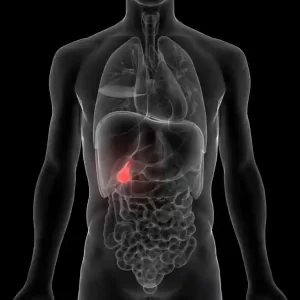
Emergency medical facility saves patient suffering from gall bladder infection

Amidst the lockdown Wockhardt Hospitals is fully geared up to manage and treat conditions of various specialities in an emergency situation.Our dedicated staff is fully trained and under strict safety the hospital is ready to face and provide medical services to its patients. A 52 year old  was brought to the Emergency Department of Wockhardt Hospitals in Mira Road with sudden onset severe, excruciating pain in the abdomen and fever. On examination the doctors  shifted to the CT scan department immediately,his scan revealed  empyema of Gall bladder secondary to cholecystitis, i.e. severe infection in the gallbladder which was full of pus. Dr. Brijesh Dube, Consultant Laparoscopic and Bariatric Surgeon after consultation decided that the only way to save patients was to perform an emergency surgery, Laparoscopic holecystectomy. The Patient was comfortable after the surgery, and discharged after 2 days. Patient and his relatives were very  relieved and grateful that they came to Wockhardt Hospitals, Mira road and appreciated the fact that all emergency services were functional and  doctors were  available despite the nationwide lockdown.

Read More
Spinal Cord Cancer

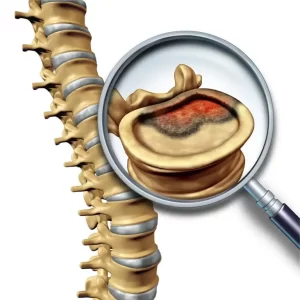
40 Year Old Man Saved From Spinal Cord Cancer

Amid Lockdown, 40 Year Old gentleman, Suffering from Intradural Spinal Cord tumor, Successfully Underwent Life-saving Surgery At Wockhardt Hospitals, Mira Road The tumor size 3.5 X 1.8 X 1.8 cm compressed the nerve roots of his lumbar region in the spine and led to impending Cauda Equina (nerve damage) Syndrome ” One of the main symptoms was backpain. The patient’s job profile involved a lot of desktop sitting, working on laptop due to work from home nature in this current pandemic “ A team headed by Dr Girish L. Bhalerao, Consultant Orthopaedic Joint Replacement(Arthroplasty), Sports Medicine (Arthroscopy) & Spine Surgeon, Wockhardt Hospitals, Mira Road, and Dr Ashwin Borkar, Consultant Neurosurgeon, Wockhardt Hospitals, Mira Road, successfully removed a 40-year-old man’s spinal cord tumor with utmost surgical skills and under a high precision microscope. The patient represented with symptoms such as back pain that was troubling him for many months. His job profile involved a lot of desktop sitting, working on laptop due to work from home nature during lockdown that added misery to his pain. Now, the patient has been recovered completely and can independently perform all activities of daily living within 24 hours with ease Life was smooth until Bhupesh Ankolekar, a 40-year-old resident of Mumbai, Who is IT engineer by profession; encountered back pain, a few months ago. Due to the erratic schedule, Bhupesh treated it as an ordinary pain and neglected it. Slowly, he found it difficult to carry out his daily activities. His pain worsened during the current pandemic when the entire country is under lockdown due to coronavirus. The patient visited Dr. Girish L Bhalerao at Wockhardt Hospitals, Mira Road, on OPD basis in first week of May for, what he assumed as, simple backache. After taking a proper medical history and a thorough physical and clinical examination patient was asked to get an X-ray for his spine. His symptoms were on and off and were clinical signs were not consistent. Hence, he was treated like any normal mechanical backache. To his dismay, after 10 days, Bhupesh’s symptoms showed a similar pattern of waxing and waning and could not find any relief. Such response triggered a high suspicion from Dr. Girish Bhalerao and he asked the patient to go for an MRI wherein it was revealed that there was a large multi-level intradural homogeneous tumor size  3.5 X 1.8 X 1.8 cm within the spinal cord spacing the entire extent with severe compression of the nerve roots in the proximal Lumbar region. Bhupesh, a recent father to a one-month-old child with his wife resting homebound after a caesarean section was taken aback after getting the diagnosis. He was also worried about his elderly parents who in this pandemic are at risk of acquiring fever and viral symptoms because of which he could not get any family members to accompany him during hospitalization. However, considering all options, and after counseling by Dr. Bhalerao, the patient underwent a successful tumor excision surgery at Wockhardt Hospitals, Mira Road. And the tumor was removed with utmost surgical skills and under a high precision microscope. “The tumor was inside the dural coats of the spinal cord and was in close proximity to the nerve roots of Cauda Equina with an impending syndrome of signs and symptoms. The patient was explained about the risks related to nerve root damage due to such nature of the tumor. This long surgery required a specialized operation theatre with advanced logistic facilities like a high precision microscope to increase the success rate of the surgical outcome”, said Dr Girish L. Bhalerao, Super Specialty Consultant Orthopaedic Surgeon, Wockhardt Hospitals, Mira Road. Dr Ashwin Borkar, Consultant Neurosurgeon, Wockhardt Hospitals, Mira Road added, “The excised tumor was encapsulated, pedunculated, and put mechanical pressure on the nerve roots. The tumor was removed entirely in toto with no remnants. It took 4 hours for the entire surgery.” Post-surgery, the patient started recovering with no pain and could resume his activities of daily living within 24 hours. The patient was discharged after 3 days of post OP care and rehabilitation. Within 24 hours, patient recovered completely and can independently perform all activities of daily living.” “My parents and wife were shocked after the diagnosis. Not only me, but the entire family was also terrified when they heard about the spine surgery after concerns mentioned by my friends and relatives. We were afraid of complications especially for risk to sensory-motor function or even to life. We thank the hospital and the doctors and nurses who took care of me not only during my stay at the hospital but during post-op follow-up as well. Dr. Girish Bhalerao’s approach was very comforting and gave us confidence. He is very skilled and talented Surgeon and exceptionally humble to answer all the doubts, however silly they are, with great patience. He makes his patients feel like family and takes care even during post OP follow up with great deliberation. Such doctors are rare to find and I’m indebted to him for my life”, delightedly conveyed Mr. Bhupesh.

Read More
Medical Equipment

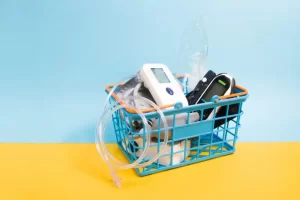
Most popular medical equipment for personal use

Here below are some of the most popular medical equipment you should consider investing for your personal use. 1. Glucometer: A glucometer is a medical device used at homes to help you monitor sugar levels in the blood. They will also help you keep track of it on a regular basis. This will make the doctor’s job easier to prescribe necessary medication or change the prescription as per the results. For insulin dependents, these glucometers have become a necessity to track and keep record of the levels. While using a glucometer, a small drop of blood is obtained by pricking the skin with a lancet and is placed on to a test strip for the meter to analyze the sugar levels in the blood.      2. BP Monitor: A blood pressure monitor is otherwise known as sphygmomanometer is used to measure the blood pressure. These devices consist of an inflatable cuff and manometer to measure the pressure. From using a stethoscope and cuff, technology has advanced to automated machines which help measure both systolic and diastolic blood pressure with high accuracy and immediately. These instruments are a must have to keep track of blood pressure regularly. 3. Nebulizers: Nebulizers are devices used to administer medication that need to be inhaled into lungs. With dramatic rise in respiratory issues in the recent past, nebulizers can be lifesaving instruments to hold on to at homes especially for people suffering from asthma or any pulmonary diseases (COPD). Nebulizers use oxygen or compressed air to break the solution into aerosol droplets that can be inhaled from the device. 4. Weighing Scales: Weighing Scales are devices which help in reading the body weight and can help while tracking a weight loss progress. These scales can be a crucial tool for ones well-being. With analog and digital weighing scales in the market, it is important to understand that both have large differences and choosing the right one depends on ones needs. Many weighing scales these days come with features which can help find body fat percentage and BMI which are extremely important for understanding of what the current condition of your body is at. 5. Pulse Oximeter: is a small, lightweight device used to monitor the amount of oxygen carried in the body. This noninvasive tool attaches painlessly to your fingertip, sending two wavelengths of light through the finger to measure your pulse rate and how much oxygen is in your system.digital) 6.Thermometer: To monitor your fever and body temperature.(mercury or digital) 7.Water heat bags:for pain relief methods  8.Ice packs: for pain relief,muscle injuries and soothing for insect bites Like your health, these medical equipment’s require some care too. If you already own any, make sure to get them serviced regularly to prevent any possible disruption.

Read More
Plasma Therapy

After defeating Covid-19, Mumbai’s Wockhardt Hospitals medicos donate blood for plasma therapy

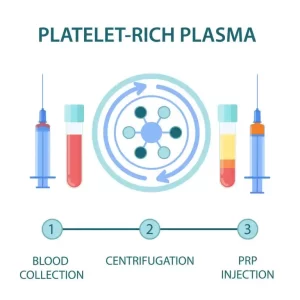
Convalescent plasma therapy involves transfusion of plasma from the blood of recovered patients into those who are moderately or critically-ill. The plasma of the recovered patient contains antibodies that fight the infection. Wockhardt Hospitals, which was declared a containment zone in April after 82 members of its medical staff contracted Covid-19, has received approval from the Central government to conduct a controlled trial of convalescent plasma therapy. In April, Wockhardt Hospitals was declared a containment zone after 82 members of its medical staff contracted Covid-19. More than 50 nurses were accidentally exposed to an asymptomatic Covid-positive patient. The hospital’s non-emergency services were closed till end-April. Earlier this month, the Drug Controller General of India (DCGI) approved the hospital’s request for the trial of convalescent plasma therapy on 20 patients of Covid-19. Convalescent plasma therapy involves transfusion of plasma from the blood of recovered patients into those who are moderately or critically-ill. The plasma of the recovered patient contains antibodies that fight the infection. At present, 123 patients of Covid-19 are undergoing treatment at Wockhardt Hospitals. Of these, 30 are in the intensive care unit (ICU). “Convalescent plasma therapy has been previously used in treating various infectious diseases such as Ebola virus outbreaks based on which we decided to initiate the trial,” said Dr Behram Pardiwala, principal investigator of the plasma trial at the hospital. “We haven’t selected a patient for the trial yet, but we will start the process soon.” Wockhardt Hospitals has tied up with a blood bank where donors can donate their plasma. “We collect around 500ml plasma per donor and the dosing will be given by our clinicians asper our approved protocol. Moreover, a person can donate plasma once a month,” said Dr Parag Rindani of Wockhardt Hospitals. So far, two doctors of the 82 recovered medical staffers from the hospital have donated their blood for plasma therapy. HT spoke to nurse Clera Menezes, 43, who was diagnosed with Covid-19 through cross transmission at the hospital on April 16. She resumed work on May 28 and on June 16, donated her blood. Menezes, who was asymptomatic, isolated herself at the hospital for almost 10 days and then returned to her home in Mira Road, where she again isolated herself. Menezes has two children, aged five and 12. “Every time I opened the door to keep my dishes outside, my children would come running to see me. My husband had placed the washing machine on the passage to my room as a boundary. It was so challenging to stop myself from hugging them,” she said. When she heard about the hospital conducting the plasma trial, she agreed to donate her blood. “I know the feeling of staying alone in an isolation ward. I decided to donate my blood for patients so that they can go home early to their families. I request other recovered patients come forward and donate their blood,” she said.

Read More

Second Opinion