
Makoplasty : Robotic Knee Resurfacing
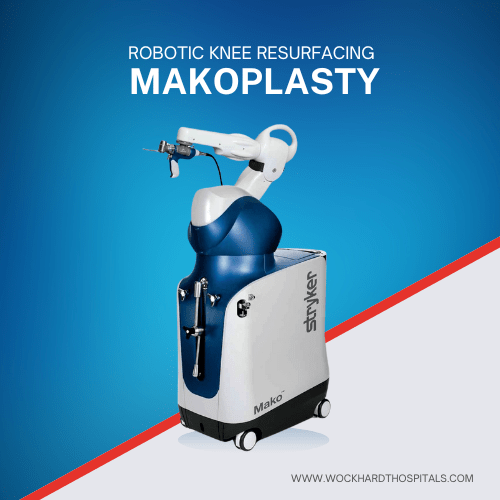
Dr. Mudit Khanna at Wockhardt Hospitals, Mumbai Central has pioneered the use of Mako SmartRobotics in South Mumbai to treat arthritis of the Knee. He is the first surgeon in the region to perform Makoplasty Robotic Knee Resurfacing and has now gained significant experience with this technique. Makoplasty: An Alternative to Total Knee Replacement Makoplasty Robotic knee resurfacing can be an attractive alternative to total knee replacement in the appropriate patient. This technique, which involves robotic bone contouring of arthritic surfaces and customized resurfacing of the damaged area, represents an improvement over traditional or conventional partial (or unicondylar) knee replacement. Without robotic assistance, partial knee replacement can provide excellent and durable pain relief but is technically challenging, and carries a higher potential for surgical inaccuracy. Dr Mudit Khanna’s experience, combined with Mako SmartRobotic safeguards, provide an unparalleled level of accuracy, precision and personalization to optimize patient outcomes. Advantages of Robotic Assistance in Knee Resurfacing After robotic knee resurfacing, Dr. Khanna expects patients to return to work much faster. Compared to total knee replacement, robotic knee resurfacing provides more reliable return to select sports, a quicker and less painful recovery, a smaller incision, a more natural feeling knee, and, importantly, a lower risk of complications. Dr. Khanna performs all his Makoplasty knee resurfacing procedures at the SOBO Unit of Wockhardt Hospitals which carries one of the lowest infection rates in the region. Comprehensive Pain Management and Rehabilitation Realizing the significance of Early rehabilitation and OLXGG of Post-operative Pain management, Dr. Mudit Khanna with the help of the department of Anesthesia has established an excellent Enhanced Recovery After Surgery (ERAS) Program at Wockhardt Hospitals, which helps to achieve Rapid recovery after Joint Replacement Surgery by improving the quality of perioperative care with special focus on achieving excellent pain management through a multimodal pain management protocol. In addition to Dr. Mudit Khanna’s expertise, the world-class environment at Wockhardt enhances the patient experience and outcome. Schedule your consultation with Dr. Mudit Khanna today and take the first step towards a pain-free, active life with Makoplasty Robotic Knee Resurfacing!
Pelvic Floor Physical Therapy: Unlocking the Power Of Pelvic Floor

I am sure you all must have heard of urinary incontinence: often known as “THE MIDLAUGH CRISIS”. But have you ever thought beyond incontinence??? I used to think pelvic floor rehabilitation was only contained to urinary incontinence and post-pregnancy. I dug deeper into research and found out that 21% of women suffer from pelvic floor issues, training our pelvic muscles could lead to benefits that all age groups should know. It is not just limited to the elderly or pregnant but a lot more than that. Well, let me throw you some highlights on pelvic floor muscles first – They are a group of muscles that form a sling-like hammock that forms the base of your pelvis, supporting your bladder, bowel and reproductive organs Functions of the pelvic floor 1. Support: It supports our pelvic organs including our bowel and bladder. 2. Control: It helps you to control your bladder and bowel functions. 3. Sexual function: helps in sexual pleasure and satisfaction. 4. Core stability: Work with core muscles to stabilise your pelvic and spine. What are the common issues affecting the pelvic muscles? 1. Surgery 2. During pregnancy and after childbirth 3. Age related condition 4. Chronic conditions 5. Poor posture 6. Pelvic floor dysfunction The questions that often arise are, ‘Is pelvic floor rehab right for me?’ ‘What should I expect during the treatment?’ and’ Are there any side effects or risks?’ When to seek professional help? If you experience any of the symptoms, you need to consult a healthcare professional. A pelvic floor rehab therapist makes a detailed assessment and plans your treatment accordingly. They will then guide you in strengthening your pelvic floor muscles through various exercises and techniques to maintain your pelvic health. Here are some of the tips for maintaining healthy pelvic floor muscles: 1. Kegel exercises 2. Maintain a healthy weight 3. Practice good posture 4. Avoid straining 5. Stay hydrated 6. Limit caffeine and alcohol 7. Quit smoking 8. Engage in regular physical activity In addition to these lifestyle changes, it is very important to maintain good bladder habits 1. Emptying your bladder completely 2. Avoiding holding urine for too long 3. Urinating when you feel the urge “Remember, you are not alone in this. Many people experience pelvic floor dysfunction and with the right approach, significant improvements are achievable. Pelvic floor rehabilitation not only helps you to take control of your health but also incorporates simple exercises and lifestyle changes that can improve your quality of life. Don’t wait any longer – prioritize your pelvic health and start feeling better”


