A fatty liver diagnosis gets waved off a lot. Something to mention at the next checkup, not something worth losing sleep over. And for most people, that reaction is fine. Early fatty liver rarely causes symptoms. Mild scarring can sit there quietly for years without doing much of anything.
Stage 3 breaks that pattern. At stage 3, “fatty liver” stops being one catch-all diagnosis. How far the scarring has spread now decides how fast you need to move. The liver sits one step from cirrhosis at this point, and what gets done here matters more than what happened before it.
So what does that stage actually involve, what shifts once someone crosses into it, and where does treatment go from there? Let’s discuss further in this blog.
What Is Liver Fibrosis, and What Does Stage 3 Mean?
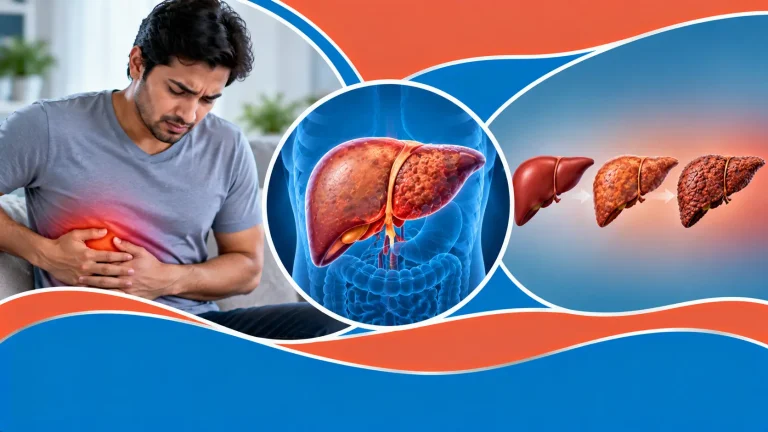
Fibrosis basically means scarring as a result of the continuous repair process of the liver following damage caused by excessive fat, or inflammation, or both. A five-point scale tracks how far that scarring has gone: F0 through F4.
- No scarring at all sits at F0.
- F1 is mild, small patches clustered around the portal veins.
- Move to F2 and the scarring has started spreading outward, still moderate but no longer confined.
- F3 is where things change meaningfully: bridging fibrosis, meaning the scar tissue has connected across separate parts of the liver instead of staying isolated.
- F4 is cirrhosis, full stop, where scarring has overtaken most of the liver’s normal structure. Stage 3 sits right on the edge of that.
The liver is still doing its job. A lot of people at this point genuinely feel fine, and that’s really the whole problem with it.
Underneath, though, blood flow through the organ has already begun struggling, and the gap left between here and cirrhosis is a lot narrower than it appears from the outside looking in.
What Causes Fatty Liver to Reach This Stage?
Nobody wakes up one day with stage 3 fibrosis. It builds over years, usually driven by some mix of the following.
Metabolic dysfunction-associated steatotic liver disease, or MASLD, is the modern term for what used to be called NAFLD, and it’s closely tied to obesity, insulin resistance, and type 2 diabetes.
- Long-term alcohol use damages liver cells on its own, independent of any metabolic issue. Chronic viral hepatitis, particularly hepatitis B and C, plays a role too.
- And persistently high blood sugar alongside high triglycerides keeps feeding fat and inflammation into the liver, year after year, until the scarring catches up.
- India’s numbers make the metabolic connection obvious. A large multicenter study across Indian diabetes and endocrine clinics put MASLD at 68.2% of patients screened.
- Roughly a third of that group already showed measurable fibrosis on liver stiffness testing.
Worth flagging that this isn’t a general population figure since everyone in the study was already at a metabolic health clinic to begin with, but the pattern still holds: fibrosis risk in India tracks tightly with diabetes and obesity. Age matters here as well. Progression speeds up after 50.
What Are the Fatty Liver Symptoms to Watch For?
Silence is the defining feature of early fatty liver. Most cases only get found because of a routine scan or a blood test that was ordered for something completely unrelated. Fatty liver symptoms, when they show up, arrive slowly. Most people blame it on something else at first.
- Fatigue that doesn’t go away with rest. A dull ache under the right ribs. Weight loss with no clear explanation, or an appetite that’s quietly dropped off. Occasional nausea that comes and goes.
- By stage 3, these tend to get harder to brush aside, even though plenty of people still write them off as stress, poor sleep, or simply age catching up.
- Some people also notice mild swelling around the ankles, as blood flow through the liver starts to change under the scarring.
How Is Liver Fibrosis Diagnosed?
Here’s what catches most people off guard: blood work alone won’t tell you where you stand. Liver enzyme levels can read completely normal even with stage 3 fibrosis already present, which is exactly why the condition goes unnoticed for so long in so many people. Diagnosis leans on a mix of tools instead.
| Test | What it checks | Notes |
| FIB-4 score | Blood-based calculation using age, liver enzymes, and platelet count | Good as a first screen, not a final answer |
| Transient elastography (FibroScan) | Liver stiffness, measured in kilopascals | Painless, takes about 10 minutes |
| MR elastography | More detailed stiffness reading | Used when FibroScan results aren’t clear enough |
| Liver biopsy | A direct tissue sample | Still the most definitive option, though used more selectively these days |
Elastography has largely taken over as the go-to method, ahead of biopsy, for one simple reason: it doesn’t hurt, and it gives a reasonably reliable read on fibrosis stage without needing tissue at all.
What Actually Changes at Stage 3?
Several things shift at once here.
- Liver function, which barely budged through stages 1 and 2, starts showing real strain for the first time.
- Blood flow through the organ gets measurably harder, since scarred tissue simply doesn’t move blood the way healthy tissue does.
- Liver cancer risk climbs too, and notably, this happens before cirrhosis has even set in.
For most doctors, this is considered a real fork in the road. This is often your last real chance to change course before the liver turns cirrhotic and the damage becomes permanent. Your follow-ups would become more frequent as well, every six months instead of yearly.
Can Stage 3 Fibrosis Be Reversed?
To some extent, yes. Hold onto that, because it matters. Stage 3 fibrosis isn’t a guaranteed one-way trip toward cirrhosis. Research tracking patients through paired liver biopsies has found that fibrosis can actually regress by at least one stage in a real share of people who manage to lose weight and bring blood sugar and cholesterol under control.
It’s not quick, and it’s not guaranteed. Usually a year or more of consistent effort, and it simply doesn’t work for everyone who tries it. Still worth attempting, though. Progress is usually measured the same way the diagnosis was made, with repeat elastography rather than a new biopsy. And a decrease in liver stiffness within the range of six to twelve months is considered to be an encouraging sign, especially since blood tests still look normal.
Fatty Liver Disease Treatment: What Happens in Stage 3?
- Here, fatty liver disease treatment stops addressing the scar tissue itself and switches its attention to what’s been fueling it.
- Weight loss carries the most weight in that plan, literally. Losing 7 to 10 percent of body weight, done gradually over several months, is the usual target.
- Diabetes or prediabetes means blood sugar has to come under control as well, and cholesterol and triglycerides often need their own management, whether that’s diet, medication, or both together.
- Alcohol needs to go completely, regardless of how much was being consumed beforehand. Physical activity helps more than people expect, and even moderate amounts can lead to measurable drops in liver fat over time.
Newer medications aimed at liver fat and inflammation have also started reaching some markets, generally reserved for people with confirmed moderate to advanced fibrosis, and always used alongside these lifestyle changes rather than in place of them.
What Happens If It Progresses to Liver Cirrhosis?
Once scar tissue spreads far enough to disrupt most of the liver’s structure, fibrosis transitions into cirrhosis. At that point, the damage is largely permanent.
Complications tend to follow a fairly familiar sequence: portal hypertension, meaning higher pressure in the veins feeding the liver, ascites or fluid buildup in the abdomen, confusion and memory trouble from toxins the liver can no longer clear properly, and a sharply higher risk of liver cancer on top of all that.
Not everyone gets there quickly. Compensated liver cirrhosis can go on for years without a single major event. Decompensation is the point at which the liver can no longer meet the body’s demands.
When is a Liver Transplant Required?
A patient usually becomes a transplant candidate only when cirrhosis has decompensated, or when liver cancer meets specific size and staging criteria.
A scoring system called MELD tells doctors how urgent things actually are, based on how the liver and kidneys are holding up.
Supply never quite catches up with demand for donor organs in India. That shortage explains why living donor liver transplant has taken over as the more common route, especially at the busier transplant centers.
Anyone pursuing a liver transplant in Mumbai is more likely, statistically, to end up with an organ from a living donor, usually a relative, than to sit on a deceased donor list for months. Weeks of evaluation come first regardless, covering donor compatibility, imaging, and a full health check on the recipient. Surgery and recovery both ask a lot of everyone in the room.
How Can You Lower the Risk of Progression?
A short list of habits actually moves the needle, particularly once fatty liver has already been diagnosed.
- If you have diabetes, obesity, or high cholesterol, regular checks on liver function and fibrosis levels become the priority.
- For those who are overweight, even modest weight loss has one of the strongest effects on liver fat.
- Cutting back on refined sugar and processed food helps too, since both feed fat buildup directly.
- Staying active most days counts for more than people assume.
- And once any degree of fibrosis has been confirmed, alcohol really does need to come off the table entirely, not just get reduced.
When Should You See a Doctor?
A handful of situations genuinely call for a real liver workup rather than waiting on the next routine visit. Fatty liver that turned up on a past ultrasound and never got followed up on properly. Diabetes, obesity, or high cholesterol that’s been around for years with no liver check in between.
Fatigue, abdominal discomfort, or weight changes that don’t add up to anything obvious. A family history of cirrhosis or liver cancer sitting in the background. In any of these cases, it’s worth seeing a liver specialist rather than putting it off.
Fibrosis staging exists for a reason. Not all fatty liver behaves the same way, and stage 3 is exactly where that difference starts to matter in practical terms. A timely check-up, well before symptoms appear, is the best way of avoiding the next step. The specialists from Wockhardt Hospitals can walk you through the right tests and help you understand where things stand.
Frequently Asked Questions
1. What are the early fatty liver symptoms to watch for?
Here’s the frustrating bit: often, there aren’t any. Fatty liver has a habit of keeping quiet in the early days, which is exactly why so many people stumble onto it by accident, a routine scan, a blood test done for something else entirely.
When fatty liver symptoms do finally surface, they’re the sort that are easy to write off: a tiredness that never quite lifts, a dull heaviness or ache under the right ribs, sometimes a bit of weight dropping off for no clear reason. And because none of it screams “liver,” people tend to shrug it away until things have gone further than they’d like.
2. Can fatty liver be reversed?
If it’s caught early, that’s a relief. When a fatty liver turns up before it’s done any real harm, it’ll often quietly put itself right once you tackle whatever set it off in the first place.
Drop a bit of the extra weight, go easy on the drink and the sugary stuff, work some movement back into your days, and the liver gets a genuine chance to recover. Catch it soon enough and the odds of setting things straight tip firmly in your favor.
3. What does fatty liver treatment usually involve?
No pill is going to fix this one overnight, unfortunately. For most people, fatty liver treatment kicks off with the ordinary, unglamorous things: taking the weight off gradually, eating a little better, being less of a stranger to exercise, and keeping conditions like diabetes and cholesterol from getting out of hand.
And if alcohol’s behind it, giving it up isn’t up for debate. Now and then medicines are brought in to deal with whatever’s tagging along with it, but when you get down to it, fatty liver treatment nearly always circles back to the small choices you make every single day.
4. Can fatty liver lead to liver cirrhosis?
It certainly can, if you just let it run unchecked. Over the years, all that quiet inflammation and scarring can spill over into liver cirrhosis, the stage where healthy tissue gives way to scar tissue and the liver begins to labor at jobs it once did with ease.
Not everyone with a fatty liver winds up there, far from it, but the fact that it’s even on the cards is precisely why acting early counts for so much.
5. When does someone with liver disease need a transplant?
Only when the liver is so badly and permanently damaged that nothing else will do, usually in advanced liver cirrhosis or a liver that’s simply given out. It’s very much the last card on the table, weighed up only after everything else has been tried.
But if it does come to that, a liver transplant in Mumbai can be arranged through specialist centers with seasoned transplant teams, who’ll walk you through the assessment, the surgery itself, and the long road of recovery afterward.