Your checkup results have arrived, and a single phrase catches your attention: “Nonspecific ST-T changes.” While your doctor hasn’t called yet, your mind is already racing through every scenario.
Such fears are common and, for the most part, unjustified. Abnormal ECG results do not necessarily indicate heart disease. A normal result may just conceal a disorder. Knowing what a normal ECG range looks like, and what abnormal results mean, makes your report much easier to understand.
In this article, we explain ECG values, what abnormal findings can mean, the cost of an ECG test in Mira Road, and when to see a specialist.
What Does an ECG Show?
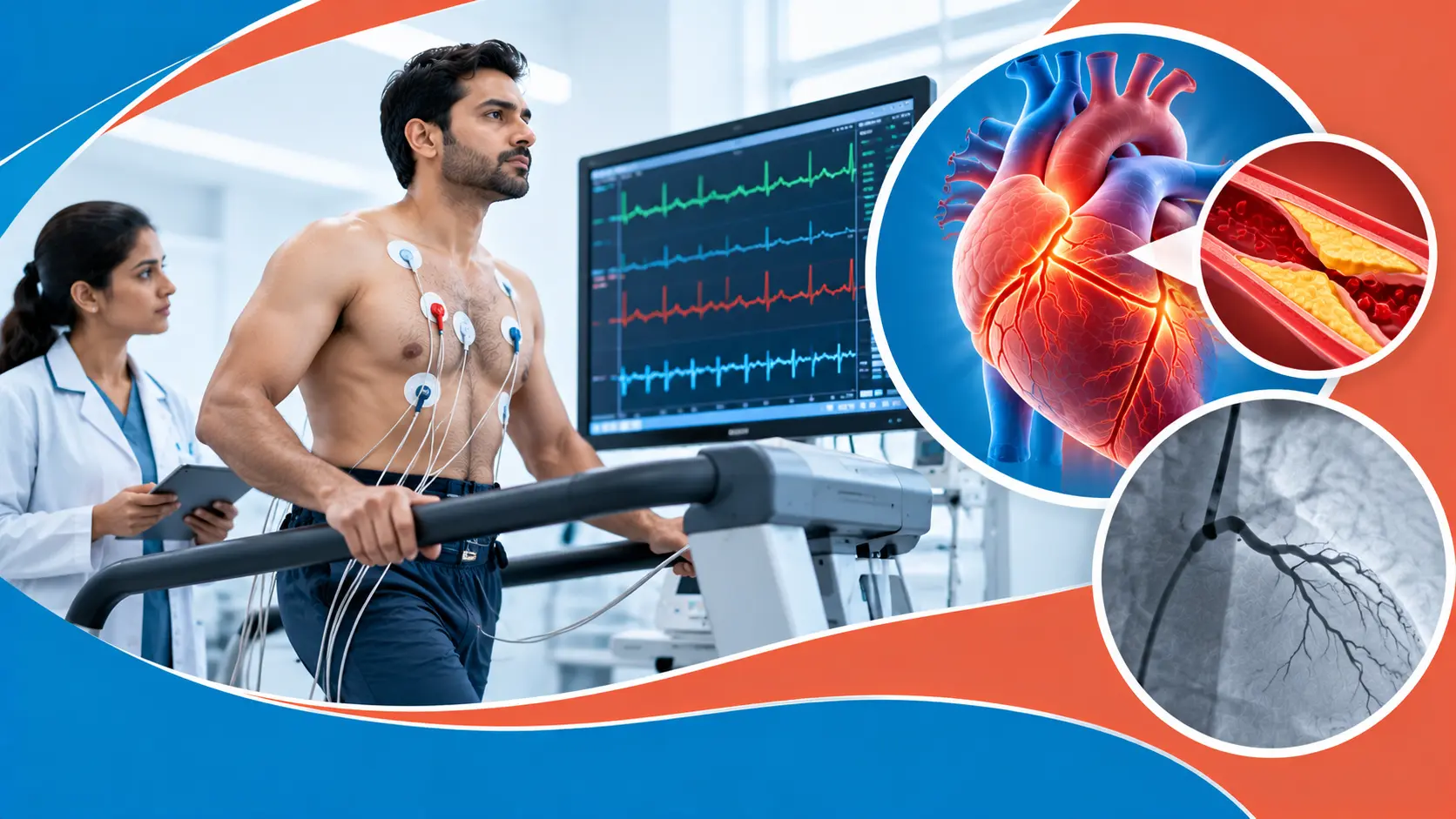
An ECG, or electrocardiogram (also known as an EKG), records the electrical impulses of your heart. Electrodes, special patches, are applied to your chest, arms, and legs, and the activity is converted into graphs. The test procedure is fast, simple, and painless. It takes about 5 to 10 minutes to record an ECG. Doctors rely on it to detect:
- Abnormal heart rhythms (arrhythmias)
- Signs of a heart attack, current or past
- Causes behind chest pain, palpitations, or dizziness
An ECG shows how the heart’s wiring behaves. It does not show the heart as a picture, which is why the ECG vs. ECHO comparison below matters.
What Is the ECG Test Normal Range?
Doctors check a handful of measurements. These are standard adult values from clinical references.
| Measure | Normal adult range | What it tells you |
|---|---|---|
| Heart rate | 60 to 100 beats per minute | How fast the heart beats at rest |
| Rhythm | Sinus rhythm | Each beat starts at the heart’s natural pacemaker |
| P wave duration | 0.06 to 0.12 seconds | Time the upper chambers take to fire |
| PR interval | 0.12 to 0.20 seconds | Signal travel time from upper to lower chambers |
| QRS duration | Under 0.12 seconds | Time the lower chambers take to fire |
| QTc interval | Up to about 450 milliseconds in men and 470 in women | How long the heart takes to reset |
How Do You Read an ECG Report Against the ECG Test Normal Range?
Each heartbeat draws three main shapes:
- P wave: A small bump as the upper chambers fire.
- QRS complex: That tall, pointy spike? It’s your lower chambers squeezing blood out.
- T wave: A soft, rounded hump. The heart is catching its breath and getting ready to go again.
Hold each printed number up against the normal ranges in the table above. One thing to keep in mind, though: the labels a machine prints aren’t always right, so have a doctor look them over.
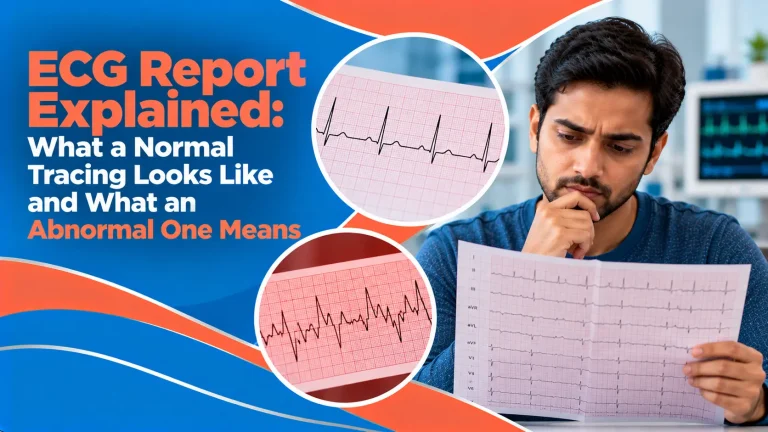
How Can We Recognize a Normal ECG?
A normal ECG shows waves that repeat themselves with the same gap between them. In simple terms:
- Every P wave is followed by a QRS spike
- The spacing between beats stays even
- The QRS spike is narrow
- The T wave follows each spike smoothly
Some variations look odd but are often harmless. A normal ECG in an athlete may show a slow rate. Occasional extra beats also turn up in healthy hearts.
Can A Normal ECG Miss A Problem?
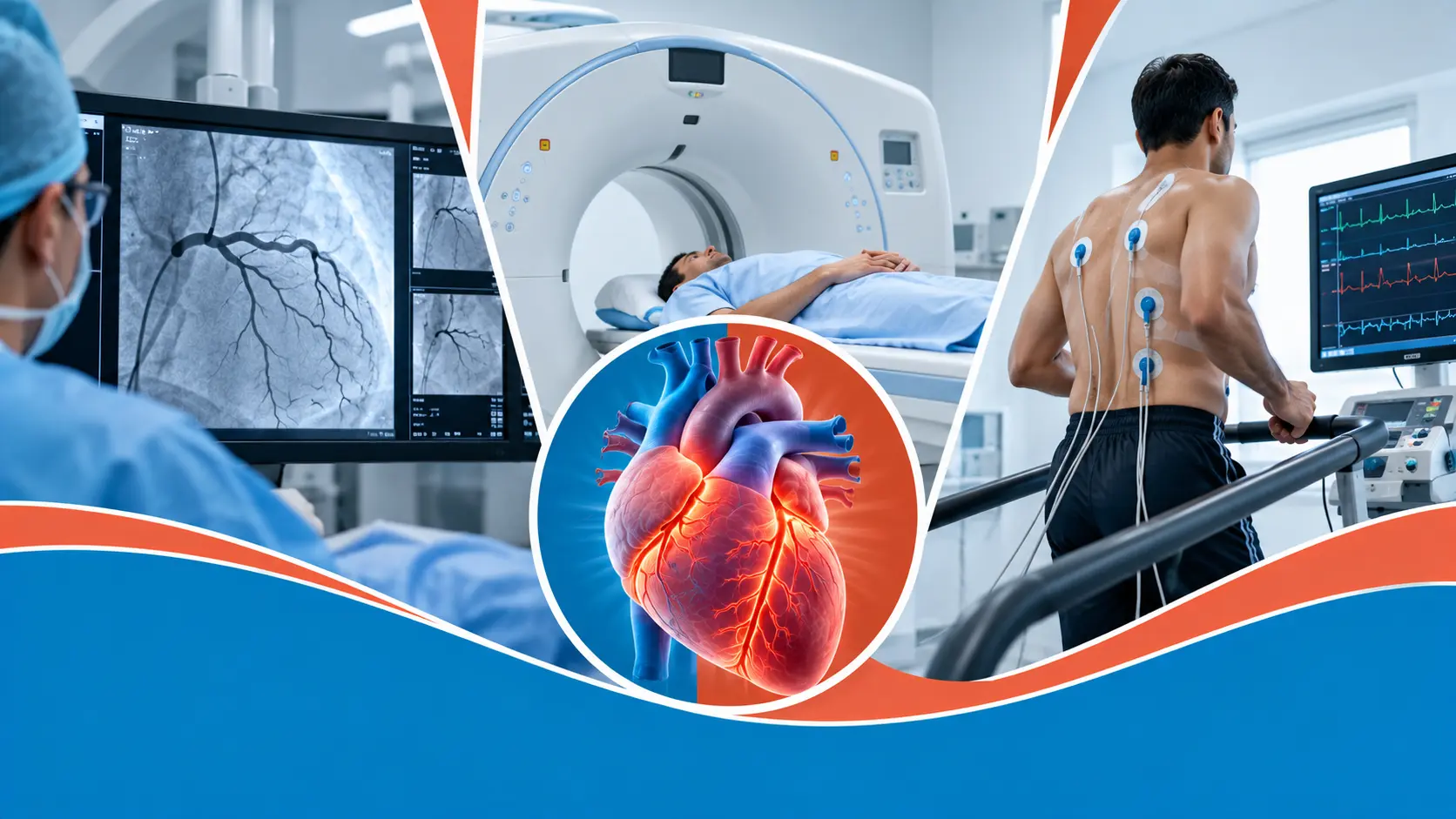
Yes. The ECG test has limitations. A resting ECG captures only a few minutes. A partly blocked artery can look perfectly normal on an ECG taken at rest. Heart rhythm issues that appear and disappear are tricky to spot in a quick test. In such cases, you might be sent for a treadmill test. Or you may be given a Holter monitor to wear for 24 to 48 hours so your heart can be recorded as you go about your day.
What Does an Abnormal ECG Mean?
Your tracing has strayed from the normal pattern. But an abnormal ECG on its own doesn’t confirm any disease. Doctors read it alongside your symptoms and other tests.
| Finding on report | What it means | Common reasons |
|---|---|---|
| Sinus bradycardia | Heart rate less than 60 | Fitness, sleep, some medicines, conduction problems |
| Sinus tachycardia | HA quick heartbeat, over 100 a minute | Fever, anxiety, anemia, dehydration, thyroid issues |
| Atrial fibrillation | Irregularity in heartbeat, disordered beating in the heart’s upper chambers | Elevated blood pressure, valve disease, age. Raises stroke risk |
| Prolonged PR interval | Slow movement of the signal between chambers | A delay or blockage in conduction. |
| ST or T wave changes | Change in the recovery part of the heartbeat | Less blood flow, strain, low potassium, or nothing serious |
| Left ventricular hypertrophy | Thickening of heart muscle | Long-standing high blood pressure, valve issues |
Which ECG Findings Need Urgent Care?
A normal ECG doesn’t always mean you’re in the clear. Early heart attacks can be missed on the tracing, so don’t hold back on getting help. Go to the emergency room if you notice:
- Burning or squeezing in the chest, with sweating
- Can’t catch your breath
- Pain that travels to your arm or jaw
- Fainting or nearly fainting
When chest pain comes with ST elevation on the ECG, it’s one of the clearest signs of a heart attack.
ECG vs ECHO: Which Test Do You Need?
| Category | ECG | Echocardiogram (ECHO) |
|---|---|---|
| What it records | Electrical activity | Heart structure, valves, and pumping, using sound waves |
| Best for | Rhythm problems, signs of a heart attack | Valve disease, muscle strength, chamber size |
| Result | A printed or digital graph | A live moving image |
When Should You Consult a Doctor About Your ECG Report?
Schedule a visit if any of the following is applicable or when your readings are beyond ECG test normal ranges:
- Your report shows ST changes, a heart block, fibrillation, or a prolonged QT interval, even without symptoms.
- You’ve been having palpitations, trouble breathing, or tiredness you can’t explain.
- You live with high blood pressure or diabetes, or close family members have had heart disease.
- Your latest tracing has changed compared to an earlier one.
Bring your past reports. A cardiologist in Mira Road compares your tracings over time, as a sequence of tracings can show you something a single picture cannot show you. Let the doctor explain you the abnormal ECG interpretation for your report and if you need an ECHO.
When Should You See a Cardiologist at Wockhardt Hospitals?
Any abnormal finding on your report is reason enough to see a heart specialist soon. The waiting never helps, and in most cases, you receive an answer after all the tests are done.
Behind every successful procedure, there is a dedicated team. If you need a cardiologist in Mira Road, the team is in your neighborhood. Here’s why patients choose Wockhardt Hospitals, Mira Road:
- ECG, ECHO, treadmill test, Holter monitoring, and angiography are listed among its heart tests
- Cardiac emergency services run 24/7
- Cashless treatment works with 40+ insurance partners
- A cardiologist in Mira Road consultation is listed at ₹1,200 to ₹1,500
Book a consult if your report has a flagged finding or family history worries you. If you feel well and your report is clean, a yearly cardiac health checkup is enough.
Frequently Asked Questions
1. Can I have heart problems with a normal ECG?
Yes, sometimes. A normal ECG only shows your heart at rest, for a few minutes. Blocked arteries or symptoms that come and go may need a stress test or an ECHO to find.
2. What are common causes of an abnormal ECG?
- Fast or irregular heartbeat
- Signs of an old heart attack
- A hypertrophied heart
- Side effects of some medicines, low potassium
3. Why is the ECG test price different at different hospitals?
It depends on where you go and what is included. Some prices are for just the recording, and some are for it and a doctor’s review of the report. The majority of them are priced between ₹200 and ₹800.
4. Is the ECG test covered by insurance?
It often is, if the test is done during a hospital stay or as part of a covered checkup. For outpatient tests, check your policy or ask the hospital’s billing desk.
5. When will I get my ECG report?
Most centers give the printout right away. A cardiologist’s written review may take a few hours, or the same day.
6. Will I need to remove my clothes?
Only from the waist up, or enough for the pads to go on your chest. Women can usually keep their bra on, unless it has a metal underwire. The technician will guide you.
7. What is the cost of ECG in Mira Road?
The diagnostic centers in Mira Road charge between ₹200-800. Home visits can cost a bit more, up to ₹1000.
8. What to take to a cardiologist in Mira Road?
Your old ECG’s and your latest ECG. Medicines you are currently taking. Blood test reports (if any). Tell us about your symptoms. When do they happen.