Latest General Health Articles | Wockhardt Hospitals

ARTICLES ON General Health

Latest Articles on General Health

3 of the biggest causes behind acne (and what you can do for each)

Whether you’re dealing with a recent breakout or an old one that you can’t seem to get rid of, here’s how to identify the different causes of acne and pimples, and how to treat each There’s nothing more annoying than a random pimple that shows up when you least expect it. But if you’re slathering on traditional acne medication in the hopes that you can force it to disappear ASAP, you could be doing more harm than good, especially because it might not be regular acne in the first place. We asked two experts to tell us what those offending spots could mean—and what you can do.  Bacterial acne  What it is: “Bacterial acne results in lesions of different sizes, blackheads, whiteheads, bumps, nodules, and cysts,” says Dr. Mhatre. It is caused when excess sebum clogs the hair follicles. When bacteria begin to grow in these follicles, it creates blackheads or whiteheads on the surface of the skin, which can get more infected.  Where you might find it: It is found in areas that are prone to higher sebum production, like the face (particularly the T-zone) and the neck.  What you can do:  The treatment for bacterial acne includes topical application of actives such as retinol, benzoyl peroxide, and salicylic acid. The former, retinoids, exfoliate the skin and prevent the hair follicles from being plugged by sebum and skin cell buildup. Benzoyl peroxide kills the p.acnes bacteria on the skin (which prevents any blocked follicles from turning into inflammatory acne), while oil-soluble salicylic acid is able to get into the pores to break down any debris, says Dr. Rinky Kapoor, cosmetic dermatologist and dermato-surgeon, The Esthetic Clinics. Fungal acne What it is: “Fungal acne is caused by Malassezia, which is the same fungus that causes dandruff. It presents itself as small closed comedones, with whiteheads beneath. They are small tiny bumps of similar size that appear in clusters and not just one or two,” says Dr. Madhulika Mhatre, dermatologist, Wockhardt Hospitals, Mumbai. It is normally associated with itching—a big differentiator from bacterial acne—she says. “Our body keeps Malassezia in balance, but in certain scenarios it is overproduced, such as in humid weather, sweating, low immunity, if you have been sick or been on antibiotics,” says Dr. Mhatre. Where you might find it:  It is more commonly present on the seborrheic areas of the body such as the forehead, back, shoulders, and neck.  What you can do: A pro will prescribe a body wash or shampoo that is anti-fungal. In some cases, a sulfur-rich wash is the first course of action. It can be strong, so contact therapy is usually suggested. “Don’t wear sweaty clothes, change out of your gym clothes as soon as you’re done wash your face, and shower twice to make sure,” says Dr. Mhatre.  You don’t want to slather on anti-bacterial treatments onto fungal acne because they can kill the normal (helpful) bacteria that live on the skin too, causing an environment for the yeast to over-grow all that much more. Instead, products with probiotics can serve to balance the skin’s pH. Folliculitis What it is: Folliculitis is an inflammation of the hair follicle. “Waxing and shaving might be the biggest culprits, especially if the former causes ingrowths and the latter are done with an old razor,” says Dr. Kapoor. In this case, the cause is not as specific—yeast or bacteria could take advantage of the inflammation and infect it.  Where you might find it: It appears as a formation of a pus boil around the hair follicle and can appear on any part of the body where there is hair. Most commonly, you’ll find it on the arms, legs, and back.  What you can do: Dermatologists will prescribe antibacterial cleansers and topicals that’ll prevent infection. If waxing and shaving are causing folliculitis, doctors suggest laser hair removal—by shrinking the hair follicles, the density of hair that grows in the area is reduced, which eliminates the possibility of them getting inflamed and infected.  Source: https://www.vogue.in/beauty/content/3-of-the-biggest-causes-behind-acne-and-what-you-can-do-for-each

Read More
Uterine Fibroids

Uterine Fibroids – Symptoms, Diagnosis & Treatment

Today, due to changing lifestyles and stressful environment, more and more women are facing the problem of uterine fibroids. Fibroids are tumors formed by the irregular growth of uterine cells, that are commonly seen in fertile women and are also usually caused by genetic factors. The exact cause of fibroids is not yet known, but the most probable cause for the development of fibroids is excess estrogen due to hormonal imbalance. Fibroids comes in a variety of sizes and in very few patients it can turn into a cancerous form. A prolonged and untreated fibroid may convert into the cancerous state in around 1% of patients. It is estimated that one among every eight women in India suffers from fibroids. Symptoms of Uterine Fibroids Let us now look at the symptoms of fibroids, if the size of the fibroid is too small or if the fibroid is outside of the uterus, no symptoms appear. Other women may feel uncomfortable and experience painful symptoms such as; excessive bleeding or severe pain during menstruation, Irregular bleeding during two menstrual periods, severe pain during sexual intercourse, pain in the lower back, frequent urination, frequent miscarriages, constipation, anemia, or menstruation stretched over a week. If any of these symptoms appear, a Gynecologist should be consulted immediately. Diagnose of Uterine Fibroids To diagnose fibroids, the doctor may suggest some blood tests along with Sonography (USG). If the exact position of the fibroids is not known in sonography, MRI, or Hysteroscopy is recommended to examine the uterus through a scope. After a thorough examination, patients are prescribed medication or surgery. Some types of fibroids are relieved by medication, if not, surgery is an option. Uterine fibroids can be removed by myomectomy surgery, if the size of the fibroids is small, this surgery can also be done through a laparoscope. Treatment of Uterine Fibroids When there is a risk of recurrent fibroids in the uterus and doctor feels patients may not get benefit from myomectomy surgery, hysterectomy surgery is the only option in which the uterus is removed, resulting in zero risks of recurrent fibroids, but patient selection is very important for the type of surgery to be done for best results. Regular check-ups by a Gynecologist are recommended to prevent fibroids, give a clear idea of family history of fibroids to your doctor, along with these weights should be kept in control, healthy diet and regular exercise has to be maintained, make positive lifestyle changes, avoid stressful situations and avoid medication without doctor’s advice. Dr. Shraddha SabnisDGO, DNB (OBGY), FMASConsultant – Obstetrics & GynecologyWockhardt Hospitals, NashikFor Appointment, Call : 0253-6624444

Read More

5 things you should NEVER feel guilty about whatever be the case

You don’t realize but guilt grows on you, and shatters your confidence. You must have heard and felt ‘guilt’ several times in your life. Sometimes, you end up dwelling on this emotion, and then there are times when people invoke this feeling within you. In both cases, it’s you who suffers the most. To be honest, you don’t need this emotion in your life, especially for things that make you happy. If you think that guilt is just another emotion that will come and go, then we must tell you that in some cases, it’s here to stay! It lays a trap in such a way that a person’s mental health goes for a toss. That’s why understanding guilt properly is very important. To dive deep into this emotion, we spoke to Dr Sonal Anand, psychiatrist, Wockhardt Hospitals, Mumbai and this is what she had to say. Sense of guilt is filled with negativity, says Dr Anand Guilt is a by-product of over thinking. At times you tend to over analyze a situation way too much that you feel burdened after doing it. This is even if it made you happy! “The cognitive theory proposes that guilt stems from thoughts. Thoughts that you have or are going to cause harm to someone, or self lead to the emotion of guilt, though it may not be entirely true,” explains Dr Anand. She adds, “Guilt may prevent us from doing an unacceptable act, and makes us realize that we have to correct our actions. But too much guilt or a condition called ‘pathological guilt’ can have a negative impact on our emotional health. It can totally break the person’s self-confidence, and give rise to thoughts of self-doubt.” Inappropriate guilt often leads to depression, anxiety disorders, and sometimes thoughts of physical harm. Sometimes, we may not be able to judge the circumstances correctly, and guilt can alter our actions, and give rise to defense mechanisms to further avoid guilt. Wallowing in that guilt can lead to a lot of negativity. There could be mistakes you are guilty of having committed. But do you know where the problem lies? It pops up when you start doubting yourself in everything you do. Dr. Anand says that these are a few things one should do guilt-free because that’s what helps them grow. 1. Never feel guilty for saying NO You should never be guilty for being assertive, and saying no. If you feel that you are being taken for granted or if someone is taking undue advantage, you should never feel guilty about saying no. Many mothers feel guilty about saying no to the child. The circumstances should be studied properly, and only goodwill should be used even if it means saying “ no”. 2. Never be guilty for making life choices Choosing your way of living is your birthright, and you should never feel guilty about it. You are the best judge of your own life. No one else can judge your life choices, be it your career goals or choosing a life partner, or even deciding to stay single. 3. Pampering yourself should be first on your list “One should never feel guilty about spending time or money on yourself. You need to keep reinventing yourself and you need a break as well for better outcomes. So, it’s ok to spend it on yourself. Of course, you have to decide according to your budget, but there should be no feeling of guilt involved,” says Dr. Anand. 4. Don’t feel guilty if you are unaware about something If you don’t know anything, that doesn’t mean you know anything. You aren’t Google, right? Therefore, you should never feel guilty about not knowing how to answer a question. Nobody has all the answers, so not knowing an answer is not a serious flaw. It’s ok to say “ I don’t know “ honestly, rather than manipulate the answer. 5. Never feel guilty about letting go “Whether it’s grieving a life partner or getting a divorce, or choosing to end a dysfunctional relationship… it’s ok to let go and move on. There will always be memories and emotions involved, but guilt should not be one of them,” Dr. Anand concludes. So ladies, next time you go on that guilt trip, just check you are not doing it for the above reasons. Source: https://www.healthshots.com/mind/emotional-health/5-things-you-should-never-feel-guilty-about-whatever-be-the-case/

Read More
Hernia

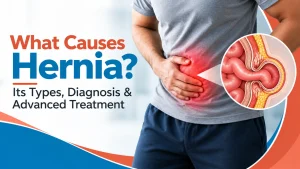
What Causes Hernia? its Types, Diagnosis & Advanced Treatment

You may have heard of Hernias many times, but even today, not everyone is fully aware of them. Simply put, a hernia is when an organ or part of an organ comes out of a natural or unnatural hole in the body. The weakening of the abdominal muscles causes the intestines to be pulled into the cavity, causing the abdomen to swell and a small-to-large bulge appears which causes abdominal pain. Types of Hernia The most common type of hernia in men is with the lining of the abdomen above the intestinal tract. Hernia blisters form in the thighs in old age, if the abdominal muscles are weak. This is called an inguinal hernia. Inguinal hernia occurring on the thigh is more common in teenagers, this bulge appears on the upper part of the thigh. Also in infants, muscles of the placenta are weak, their navel appears to be swollen when they cry, so it is better to get it checked by a doctor. In the same way, in pregnant women, uterine tension falls on the abdominal muscles. Excess fat builds up in the abdomen, causing a cavity in the abdomen and results in the intestines to be pulled into it. What are the Main Causes of Hernia? A hernia can occur if the abdominal muscles are weak and when there is too much pressure on the abdomen from the inside. For example, whooping cough in infants, asthma in older people, cough caused by smoking, constipation, urinary incontinence, or lifting very heavy objects can lead to a hernia. It is important to consult a surgeon as soon as you notice a hernia. Failure to do so can lead to serious consequences, such as severe abdominal pain, gas, and even retention of the bowel. Sonography (USG) is performed to determine the nature and location of the hernia, and then the course of treatment is determined. How is a Hernia Diagnosed? To steer clear of Hernia, surgery is the only solution. This surgery can be performed in the traditional way and is also done with the most advanced laparoscopy method. During surgery, the cavity is closed inside the abdomen and a mesh called prolin mesh is inserted so that the organ does peep out of that space. There are many benefits of having surgery with laparoscopy. It does not have a large incision, surgery is done through an advanced laparoscope through only three small holes. This result is no bleeding, very short hospital stay, the patient recovers quickly and can start his/her routine early. It’s important to see a specialist immediately after noticing hernia-like symptoms and follow the instructions given by the doctor. This will help you to deal with the problem of a hernia successfully. Dr. Sandeep SabnisMS, DNB (Surgical Gastroenterology)Consultant – MIS, Surgical Oncology, Bariatric Surgery, HPB & Liver TransplantationWockhardt Hospitals, NashikFor Appointment, Call: 0253-6624444

Read More

Are your parents bored and lonely at home? Engage them with these 6 activities

It is important to keep your parents mentally and physically charged for the sake of their well-being. Read on to know more. Staying engaged is not just important for the younger lot, but even older adults. It not just keeps them physically fit, but also keeps a tab on their mental and emotional quotient. . In cases where parents live away from their children, it becomes all the more important for them to engage in productive activities that can help them pass their time. This will definitely help them divert their attention from things that keep them worried all the time. Experts have also analyzed that those elderly adults who are active and enjoy their retirement time are healthier, and have better mental health than those who have nothing to do. According to Dr Rahul Khemani, consultant psychiatrist at Wockhardt Hospitals, Mumbai, when older adults are engaged and active, they tend to be happier. They tend to experience more satisfaction and contentment in their lives. As senior members of our society suffer from isolation and feelings of loneliness, a lack of support system can lead to increased anxiety and depression. It can even exacerbate dementia in some older people. That’s why it is important to consider physical and mental activities for these older adults. It is also beneficial to incorporate these into their daily routines, especially in the long run. Dr Khemani recommends these six activities to keep older people engaged: 1. Outdoor walks Outdoor walks are not just great for your parents’ physical health, but it also gives them an opportunity to interact with fellow mates. During covid time, it’s better to stay at home, but to break the monotony, they can totally wear proper masks, maintain social distancing, and enjoy a walk once in a blue moon. “Do you know, being in nature can become a natural soothing agent?” says Dr Khemani. 2. Senior exercise programs “Many parks have come up with community-based exercise programs. This increases the sense of bonding between older adults, provides companionship, and also fosters physical activity,” he recommends. 3. Arranging coffee dates Being old doesn’t mean you can’t do all the stuff that you used to when you were young. It is a great mental booster to spend quality time with your partner or friends. Going often on coffee or lunch dates can totally help in breaking the monotony. “Loneliness is one of the biggest challenges faced by our grandparents. Seeking out the company of friends on a regular basis can alleviate the feeling of being alone. It also provides a sense of comfort, especially for those who have lost their spouse,” he says. 4. Learning new technology With everything going online, they can also try and learn things like how to make a video call, use Facebook, or watch a movie on Netflix. It can be a great way to boost their confidence and bring some change to their otherwise routine lives. This will also make them feel accomplished, and gives them a sense of confidence,” suggests Dr. Khemani. 5. Pick a volunteer job If your parents are hale and hearty and want to spend some time working then, there is no harm trying to help them with a volunteer job. Of course, their job doesn’t have to be hectic like before, but this will just help them pass their time. Joining an NGO or an organization that helps others is a great way to satisfy yourself, and feel good. 6. Take up hobbies “Retirement is a good opportunity to take up hobbies that you might have given up a long time back. Being engaged in a hobby is perfect to be creative, productive, and happy,” he concludes. So, give your parents the gift of life and make them realize that this is their time to have fun, and do what they always wanted to. Trust us, over a period of time, you will see them much happier and healthier!

Read More

4 Things you Can Say to Soothe a Depression Patient

The caregivers play an important role to keep depression patients safe. Read on to know more. Understanding mental health conditions is still a task for us.  And if someone known to us is dealing with something, it becomes pretty hard for us to talk to them, especially because we feel unsure of what might offend him or her. That’s why it is critical to know how to deal with someone who is tackling mental health issues like depression. Dr Rahul Khemani, a psychiatrist at Wockhardt Hospital, Mumbai says, “When caregivers of patients dealing with depression come to me, their first and foremost question almost always is “what do we do now?”. Most of them are clueless about how to talk to the concerned person, what to say to them, and what to avoid.”  He adds, “My only reply is, just listen to them, as this is all they want.” People Dealing with Depression are Always Looking for a Safe Space Dr. Khemani suggests that everyone seeks a comfortable space to open up and talk, and so do people who are dealing with depression. He listed down a few things that you need to keep in mind if someone around you is dealing with depression: Don’t judge them: They will only speak to you if they are comfortable to confide in you. Once they feel you’re trustworthy and non-judgmental, they will open up to you easily.  Don’t assume: “I have seen many people not asking the person who is undergoing depression about things, instead they presume everything about their needs.  Not everyone will cheer up by going out or by eating their favorite meal, everyone has different needs and you can only get to know them when you’ll ask them. There  is always a possibility that you might think they need it, but according to them they don’t need it at all.” Don’t use any platitude phrases: This is one of the most common things, and must be strictly avoided. People use phrases like ‘ it’s not a big deal, we all have been through it’ or ‘you need more will power’, etc. without understanding the situation the person is in. They don’t understand that this might bring the person down. Four Phrases that you Can Say to Someone who is Dealing with Depression: 1. I’m sorry you’re going through this This will build a connection between you and the person. 2. Do you want to talk more about this? This phrase will create a feeling of empathy. It will build bonds and create more trust. Also, this gives a window to the person dealing with depression, whether to opt-in or out rather, rather than being forced into a conversation. 3. Whenever you need me, I’m there A friend in need is a friend in deed and this statement actually certifies that you are someone s/he can bank on. “A person dealing with depression is at times hopeless. A statement like this will make him/her feel worthy,” says Dr Khemani. 4. You are not alone in this This statement is again a testament of you being there with a person in their thick and thin. “Be careful when you say you understand their problem. It can act as a double- edged sword. Some people might feel good but some might get offended, and feel that you do not understand their situation. So, one can say I might not understand what you are going through but I’m there for you”, he suggested. The Last Word We need to acknowledge that depression is real, and not just in the mind. It’s not a quick fix, it will take its own time. Your job is not to fix a person; instead, your job is to support them. That will make the person feel reassured. In psychology, there is a concept of expressed emotions that can either be positive or negative. Positive is when you allow the person to heal, and negative is where you are commenting on someone’s behavior without knowing the exact reason. Therefore, talking and hearing the person out is very important, so that you pull them out of depression. So, use these tips and help someone who is in need! Source: https://www.healthshots.com/mind/happiness-hacks/here-are-4-things-you-can-say-to-soothe-a-depression-patient-according-to-a-psychiatrist/

Read More

6 reasons why you keep waking up in the middle of the night

If your sleep cycle is disturbed, it can eventually affect your physical and mental health. Here are some factors that can cause disturbed sleep. Do you end up waking up with a headache or feeling like you’re not well-rested in spite of sleeping for 7 to 8 hours? It’s probably because you’ve woken up multiple times in the middle of the night. You aren’t alone in feeling this way because it is a common lifestyle problem for many. A study conducted by the journal Sleep Medicine with over 8,000 participants noted that almost 40 percent of the people woke up in the middle of the night. The thing is that you need to fix this issue before it starts taking a toll on your health. To fix your sleep cycle, you need to figure out exactly what could be causing disturbed sleep. For this, we talked to Dr Sonal Anand, a psychiatrist at Wockhardt Hospitals, Mumbai. Here are 6 prime reasons you end up waking up in the middle of the night: Working late till late in the night and rotating shifts can alter sleep patterns, disrupting sleep on the weekends and also on normal working days. “Having too much tea, coffee and water in the evening can cause the bladder to become full late in the night and lead to multiple bathroom visits,” suggested Dr Anand. According to a study, people who use their smartphone right before they are off to sleep develop insomnia or deal with sleep deprivation. Moreover, this problem doesn’t just lead to mental fatigue but it also diminishes focus and productivity. Here are 6 things you can do to induce deep sleep: Ladies, it’s time to fix your sleep cycle to ensure you always stay healthy!

Read More

Are you Having Arthritis? Know About the Treatment Options to Tackle it

Rheumatoid arthritis treatment options: Arthritis is a bothersome condition and can also take a toll on one’s mental well-being. Arthritis diseases can damage joints very quickly, and arthritis may be a part of a more severe disease affecting multiple organs of the body. Today, we tell you what arthritis and advice to tackle it appropriately is. Arthritis means joint pain with some signs of inflammation like swelling, redness, stiffness, and decreased range of motion. Arthritis or arthritis diseases can be of more than 20 types, and different types are managed differently. Arthritis diseases can be very complex and do not necessarily affect older adults. The most common arthritis we see in the general population is Osteoarthritis (OA). Osteoarthritis usually occurs with increasing age and age-related joint wear and tear play a significant role in the occurrence of this type of arthritis. Osteoarthritis tends to affect one’s hands, knee, hip, and spine. Hence, it is necessary to know which type of arthritis disease one suffers from. If you Have Arthritis-like Symptoms, the Following Things Can Be Done to Seek Adequate Relief Diet: There are a lot of myths and misconceptions about diet for arthritis patients. Always clear your myths with an arthritis expert like a Rheumatologist. The old-age Indian mythology that sour (that food) like tomato, curd, lemon, oranges, tamarind, etc., and other foods like chana dal, cabbage, rice, non-vegetarian food, etc. because arthritis is not based on any substantial evidence. The concept that all arthritis is related to uric acid is also wrong. Foods like oranges, guava, etc. provide vitamin C, which is very good for general health. Chana dal, low-fat dairy products, etc. can provide proteins essential to build muscle strength in arthritis patients. In short, the best dietary advice is to eat what suits you and eating a healthy and balanced diet most times.  Exercises: Physiotherapy or some form of activities may be advised to help you strengthen your joints and increase mobility. Strengthening your joints and reducing stiffness is essential. You can opt for walking, cycling, aerobics, and even swimming which can be beneficial for your joints. You can even do cardio and strength training under guidance. Always consult your doctor for appropriate exercises. Surgery: Surgery is an option if the joint is severely damaged. Hip, knee, or other joint replacement surgeries can be done in selected patients. These surgeries can be beneficial in restoring mobility and function in patients with persistent pain, limited mobility, and advanced joint damage. A rheumatologist is a physician who can diagnose different types of arthritis or similar diseases and also determine their severity. If one has significant joint pain, they should strongly consider seeing a Rheumatologist. The rheumatologist will evaluate the patient and form a plan based on severity. They may advise taking medications to reduce pain, swelling, and inflammation of joints or other organs. Disease-modifying antirheumatic drugs (DMARDs) may be given to modify or control your disease. DMARD’s can help to prevent joint or organ damage.

Read More

Why Some People Are More Sensitive Than Others?

A highly sensitive person (HSP) is a term for those who are thought to have increased or deeper central nervous system sensitivity to physical, emotional, or social stimuli Are you a highly sensitive person? or Do you know someone in your personal or professional life who are highly sensitive?  Well, High sensitivity can be defined as acute mental, physical, and emotional responses to external (social, environmental) or internal (intra-personal) stimuli. A highly sensitive person can be an introvert, an extrovert, or somewhere in between. A highly sensitive person (HSP) is a term for those who are thought to have increased or deeper central nervous system sensitivity to physical, emotional, or social stimuli. Some refer to this as having sensory processing sensitivity or SPS as a short form. Though there are many positive aspects of being a sensitive person like a greater ability to listen and having a greater empathy or intuitiveness and better understanding of others but high sensitivity also adversely affects one’s health, happiness, and success, and often complicates relationships.  According to Dr. Sonal Anand who is a Psychiatrist in Wockhardt Hospital at Mira Road, Mumbai, Being highly sensitive can be a combination of your genetics and the environmental factors that play a big role. Like if you have a parent who is quite sensitive, the chances of you getting sensitive increases. It also depends on the kind of person that you have become like the experiences that you get or how you are brought up and the values you have learned can determine the sensitivity in you. By the age of 17 to 18, 95% of your personality is developed.   “Well, being sensitive for few things is fine, like regarding your partner or spouse or relationship and family member as it can make your relationship better but sometimes being overly sensitive can lead to anxiety disorders and depression. This is the most common cause of depression, most of my patients who are in depression often say that they are very sensitive or little things upsets them a lot,” she said. “If feel that you can’t handle a situation or you are having anxiety or you are into depression, then you must visit your therapist for help. However, self-care and building your confidence matters a lot, while taking therapies can help you too. Moreover, self-help can be great for you, like you can identify which things make you more disturbed and you can work on it,” she added. While many people may experience some of these signs from time to time, a highly sensitive person will likely “feel too much” and “feel too deep.” Some individuals may be highly sensitive to just one or two stimuli, while others may be strongly affected by more on the list. Highly sensitive people are most of the times are described as being “too sensitive” and it is considered as a personality trait in people. These terms were first coined by psychologists Elaine Aron and Arthur Aron in the mid-1990s and interest in the concept has continued to grow tremendously since then. Anyone could be an HSP, whether a man or woman, adult or child. A high sensitive person has a more sensitive central nervous system, making them highly attuned to physical, emotional, or social stimuli than others. How Do You Know? High sensitivity is a personality trait that involves increased responsiveness to both positive and negative influence.  But it is important to remember that being an HSP does not mean that you have a diagnosable condition. This applies to a few different categories  There are several traits or characteristics common to HSPs, according to the researchers who identified this personality trait: However, HSPs experience higher levels of stress than others, and research has found they are also more prone to burnouts because they get easily overwhelmed. While, the lack of awareness of the trait can make dealing with hypersensitivity challenging for a lot of HSPs.

Read More

Love a good cuddle? Here are 7 legit reasons why you should get cozy more often

From a jadu ki jhappi to intimate cuddling — there’s just something about holding someone closely that’s oh-so-comforting! You might not be someone who loves cuddling, but trust us, the power of touch can’t be undermined at all! Even doctors believe that it not just promotes healing, but there are several other health benefits that you get when you cuddle. According to psychiatrist, Dr Rahul Khemani from Wockhardt Hospitals in Mumbai, touch is the first sensation we learn about. It develops way before we develop vision, or even learn to speak. Cuddling is also a form of communication. Skin-to-skin contact has been encouraged after child birth to strengthen the mother-child relationship. And the impression of this memory stays with us for the rest of our lives. “Hence, it isn’t surprising that cuddling, or physical contact with someone you love has an impact on your physical and mental well-being,” he says. 1. It releases love hormones When you cuddle, your body releases more oxytocin, or the ‘love hormone’. This doesn’t happen even when you do something that otherwise makes you happy, be it cooking, cleaning or listening to music, etc. 2. Cuddling builds better bonding “More oxytocin in your body means more bonding. And by bonding, I mean being in sync with the other person emotionally,” says Dr Khemani. 3. Cuddling keeps you calm When someone hugs, you instantly feel a sense of calm. That’s because cuddling or hugging lowers stress by releasing oxytocin, which is a natural anti-anxiety medication. “It also gives us a break from our otherwise hectic and busy schedules. Touch soothes us, makes us feel safe and secure. It makes us feel loved and comforted,” he suggests. 4. It reduces stress “When your stress levels are lower, you find it easy to sleep, and cuddling is a great way to do that. Your serotonin levels get a boost too, with cuddling. This in turn makes you feel good about yourself and can be immensely beneficial when you find yourself in a negative headspace,” he recommends. So, if you are having a real stressful day then just cuddle it away. 5. Cuddling build sexual intimacy Snuggling into each other’s arms and touching not just helps you bond with your partner, but it also restores that spark between you two that improves your sexual relationship, and makes you comfortable with intimacy. It’s like the first step towards getting physical. 6. Cuddling regulates heart rate “If you want good heart health, then you must cuddle. Also, when someone is angry or emotionally charged, then their heart rate shoots up. A cuddle can lower it down to an optimum level. “When you are in close contact with your partner, you unconsciously pick on their body rhythms. Cuddling can help you sync your partner’s breathing with yours, even when they start getting anxious or hyperventilating,” he explains. 7. It relieves pain Oxytocin also helps in soothing pain. That’s why touch therapy is recommended when you experience mental or physical discomfort. It makes you feel needed, and shows someone is there during your lows. This brings emotional satisfaction and a sense of comfort, due to which oxytocin is released in the body to ease out pain. The last word “We need to understand that little things like cuddling make a whole lot of difference. Touch is an integral part of the human experience, and will remain so throughout our lives. A lot of what we do is determined by the sensation of touch. With this pandemic and physical distancing, it has become even more important to gather those oxytocin molecules by cuddling with someone you love. And if you don’t have a person to cuddle with, get yourself a pet! Snuggling with a pet brings equal amounts of happiness,” he concludes. So when Sheldon from The Big Bang Theory can approve of cuddling — what’s the deal with you peeps? The moral of the story is: even if you hate being a snuggler, do it for the sake of your well-being! Source: https://www.healthshots.com/mind/happiness-hacks/here-are-the-7-surprising-health-benefits-of-cuddling/

Read More
Group (24)

Mumbai Central: +912261784444

Group (24)

Mira Road: +912240543000

Group (24)

Nagpur: +917126624100

Group (24)

Rajkot: +912816694444

Second Opinion


TOTOWIN88

TOTOWIN88

BETSLOTS88

BETSLOTS88

betslots88

betslots88

betslots88

betslots88

betslots88

betslots88

betslots88

betslots88

totowin88

totowin

totowin

totowin88

totowin

totowin88

totowin88

totowin88

totowin88

kingliga

kingliga

kingliga

kingliga

kingliga

kingliga

kingliga

kingliga

kingliga

kingliga

kingliga

kingliga

kingliga

kingliga

kingliga

totowin88

prediksi togel

bocoran togel

syair togel

paito togel

livedraw togel

TOTOWIN88

TOTOWIN88

TOTOWIN88