
Diabetes Care Archives - Wockhardt Hospitals

ARTICLES ON Diabetes Care

Latest Articles on Diabetes Care

hba1c normal range

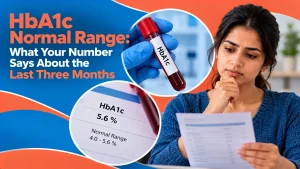
HbA1c Normal Range: What Your Number Says About the Last Three Months

HbA1c: 7.2%. Is that the line sitting in your inbox right now? Good, bad, somewhere in between? It’s hard to tell without context. And there’s another puzzle: why does your doctor fixate on this figure more than the fasting sugar you measured at home this morning? A shrug won’t do here, and neither will panic. A glucose reading shows only one picture. A regular sugar test tells you about the last few minutes. HbA1c gives you an idea of the past 3 months. Hence, that’s the reason why it helps detect problems early enough, mostly before you notice any symptoms yourself. The current article will discuss the following important points: HbA1c normal range, an actual interpretation of your personal HbA1c result, and how HbA1c defines your blood sugar average. What Is the HbA1c Test? Your red blood cells carry a protein called hemoglobin. Its main job is moving oxygen around your body. But it also picks up glucose along the way, and once that sugar attaches, it stays for the life of the cell. HbA1c, also called A1c or glycated hemoglobin, measures how much sugar has built up this way. More sugar in your blood means a higher reading. So if you’ve recently changed how you eat, how active you are, or what medication you take, give it some time. You’ll usually start seeing those changes reflected in your HbA1c after about 6 to 8 weeks. There is nothing special you need to do before the HbA1c test. You don’t need to fast or do any other preparation before the test. Just go and take it whenever you want. What Is the Normal Range of HbA1c? Labs and doctors across India generally follow American Diabetes Association cutoffs. HbA1c (%) HbA1c (mmol/mol) What It Means Below 5.7% Below 39 Normal 5.7% to 6.4% 39 to 47 Prediabetes 6.5% or higher 48 or higher Diabetes Diabetes makes the goal different. The recommended goal for most adult patients is 7%. If you are young and in overall good health, your target is 6.5%. Someone older, who has heart disease, or who is prone to sudden low blood sugar often receives a higher target, typically between 7.5% and 8%. This isn’t a number to copy off a friend’s report. Your doctor decides it with you. How Are HbA1c And Mean Blood Glucose Related? HbA1c is presented in percentages, whereas the second one is measured in mg/dL by your glucometer. There is a formula called estimated average glucose (eAG) that connects the two numbers. eAG (mg/dL) = 28.7 x HbA1c – 46.7 The above-mentioned formula estimates mean blood glucose levels according to your HbA1c results from morning to midnight during a 3-month period. HbA1c Chart: Converting HbA1c to Average Blood Sugar HbA1c (%) Average Glucose (mg/dL) Average Glucose (mmol/L) 5.0 97 5.4 5.5 111 6.2 6.0 126 7.0 6.5 140 7.8 7.0 154 8.6 7.5 169 9.4 8.0 183 10.2 9.0 212 11.8 10.0 240 13.4 12.0 298 16.5 Each 1% rise in HbA1c adds roughly 29 mg/dL to your average sugar. Notice your home glucometer painting a rosier picture than this chart does? Meal spikes or overnight highs are probably hiding where fasting checks cannot see them. What Does It Mean To Have An HbA1c 7.5? HbA1c 7.5 means the average blood sugar value is 169 mg/dL or 9.4 mmol/L. Never had a result like this before? Then it’s a strong sign of diabetes, since anything from 6.5% and up falls in that range. Expect a repeat HbA1c test first. Already on treatment? Then 7.5% isn’t a reason to worry. A few changes to your food, activity, or medicines can still bring it down. For older adults, or people who often have dangerous sugar lows, doctors may actually be happy with 7.5%. Pushing it lower could do more harm than good. When Can HbA1c Results Be Misleading? The HbA1c test depends on healthy red blood cells. Some conditions that are quite common in India can throw off the result: Iron deficiency anemia: Can push your result up even if your sugar isn’t that high. Thalassemia trait or other hemoglobin variants: Some labs’ machines don’t read these properly. Kidney disease, recent blood loss, or a transfusion. Any of these can throw the reading off. Tell your doctor if one applies to you. Pregnancy: Your body replaces red blood cells faster than usual. Your doctor will probably check your blood sugar directly instead. Mention it to your doctor if the numbers refuse to match your glucometer. A fructosamine test, or a continuous glucose monitor, usually sorts out what’s really going on. How Often Should You Get Tested? A few groups belong on a yearly testing schedule. Family history of diabetes. Extra weight. High blood pressure. Age past 30 to 35. A previous bout of gestational diabetes. Prediabetes sits in that same yearly bracket too. Diabetic and stable at target? Twice-a-year evaluation will do it. Missing the target, or recently switched medication? Every three months is the better call. How Can You Lower Your HbA1c? Your HbA1c won’t drop in a week. It takes about three months to reflect real change, because that’s how long red blood cells last. Avoid refined carbs and sugary drinks. Just make them occasional rather than daily. Try a short walk after your main meals. It’s one of the simplest ways to stop sugar levels from shooting up. Balance your meals. Rice or rotis with dal and sabzi keep your sugar steadier than a plate of carbs alone. When Should You Check with an Endocrinologist in Mumbai? Many people manage diabetes well with a family physician. A visit to an endocrinologist in Mumbai starts making sense once any of these show up. HbA1c refuses to drop below 8% even with active treatment Diabetes turned up early, or type 1 is a possibility Pregnancy is here, or being planned Low blood sugar episodes keep repeating Insulin or another complex therapy is on the table Don’t panic if your HbA1c doesn’t match your
Read More
ppbs test

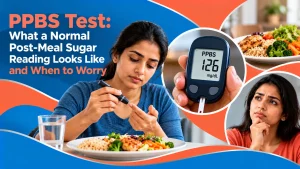
PPBS Test: What a Normal Post-Meal Sugar Reading Looks Like and When to Worry

You walk out of a routine consultation with a slip from your doctor that mentions “PPBS test,” with no explanation attached. Likely someone has referred to it before; probably your parent or neighbor living with diabetes; you would just nod your head without any idea of what it measures. The PPBS test procedure is fairly straightforward: you eat, then wait 2 hours and have your blood drawn to get a number without knowing what it means. This article will help you understand PPBS test results and their normal range. What Is the PPBS Test and What Does PPBS Stand For? PPBS full form is Postprandial Blood Sugar. It’s one of the most common tests on a diabetes report. The idea is simple. 2 hours after your first bite, your blood is checked to see how well your body has handled the sugar from that meal. Food raises blood sugar, that’s normal. What happens next is what matters. A healthy body brings that spike back down within a couple of hours. A body struggling with insulin doesn’t, and the sugar lingers. That gap between the two is exactly what this test is built to catch. You’ll rarely see it ordered alone. Doctors usually pair it with a fasting blood sugar test, and for good reason. Fasting sugar tells you your baseline, the resting state. PP sugar level tells you what fasting can’t: how your body handles food once it hits your system. How Is the PPBS Test Done? There’s not much to it. Do not fast the previous night, no preparation needed, just follow your regular routine. Have your regular meal (most testing centers recommend that you have about 50 to 100 grams of carbohydrate intake in a 20-minute span). Remember the exact moment you started eating and not when you finished eating Blood gets drawn exactly 2 hours from that starting point No medication changes needed unless your doctor tells you otherwise Timing trips people up more often than you’d expect. If you draw blood at 90 minutes or delay it to 3 hours, the result won’t provide an accurate picture. What Is The PPBS Test Normal Range? This is the part everyone skips ahead to, so here it is, straight up. Category PPBS Reading (2 hours after eating) Normal Below 140 mg/dL Prediabetes 140 to 199 mg/dL Diabetes 200 mg/dL or higher   Under 140 mg/dL, your body is processing the meal’s glucose exactly as it’s supposed to 140 to 199 mg/dL puts you in prediabetes territory, a warning worth noting, not a diagnosis to panic over 200 mg/dL or above brings diabetes into the picture, especially on a repeat reading, and that’s worth a doctor’s attention Worth checking before you compare your own report to this table: these ranges assume a standard 2-hour draw. Some labs use a 1-hour or 90-minute marker instead, and that shifts the reference range entirely. Confirm what your report actually measured first. Why Does the PPBS Test Matter More Than People Think? Fasting sugar gets most of the attention in a routine checkup. PP sugar level, though, often catches a problem first. Here’s the pattern doctors watch for. Fasting sugar looks completely normal, yet blood sugar quietly spikes after every meal. It’s common in early type 2 diabetes, and it shows up well before fasting numbers ever turn abnormal. Miss this stage, and you also miss the window where diet and exercise changes alone can still turn things around. In India, that window matters even more. Consider the numbers: 11.4% of Indian adults already have diabetes 15.3% more are already prediabetic That’s over 101 million people living with diabetes today Another 136 million are heading there without knowing it These figures come from the ICMR-INDIAB study, published in The Lancet Diabetes & Endocrinology. A PPBS test remains one of the simplest, cheapest ways to catch that shift while there’s still time to reverse it. What Causes a High PPBS Reading? A high reading after eating doesn’t automatically mean diabetes. It does mean something’s worth a closer look. If you have high results, then it may be due to one of these: Your body’s cells normally absorb sugar after insulin stimulation. However, in insulin resistance, this does not happen. Type 2 Diabetes, which is undiagnosed or poorly controlled Taking a high intake of refined sugar meal just before the test Steroids or similar medications that push blood sugar up temporarily Stress, or a sudden illness around the time of testing A pancreatic condition that disrupts insulin production More than one of these can affect your reading at once. That’s why a single high number isn’t a diagnosis. A second test, often with an HbA1c, gives a clearer answer. What Symptoms Come With High Post-Meal Blood Sugar? Here’s the tricky part. Plenty of people walk around with high post-meal sugar and feel absolutely fine. This is exactly why regular testing matters. You can’t rely on feeling unwell. If symptoms do appear, look out for: A wave of tiredness an hour or two after meals Thirst that feels excessive, especially right after meals Running to the bathroom more than usual Vision that blurs and clears on and off Cuts or wounds taking longer than normal to heal Losing weight without trying to Notice any of this repeating after meals? Don’t wait for your annual checkup. Get a PPBS test done sooner. How Should You Prepare for a PPBS Test? Preparation here is minimal, but a handful of things can affect how accurate your result turns out. Eat your usual meal, the normal portion you’d actually have, since the test is meant to reflect real eating habits Don’t skip the meal beforehand. This totally misses the point of the test. Avoid strenuous exercise shortly before undergoing the test, because this will reduce blood sugar temporarily. Inform the lab of your medication use, particularly those for treating diabetes. Drinking water is acceptable during the 2-hour period. A single figure never tells the whole truth. When Should You

Read More

Second Opinion