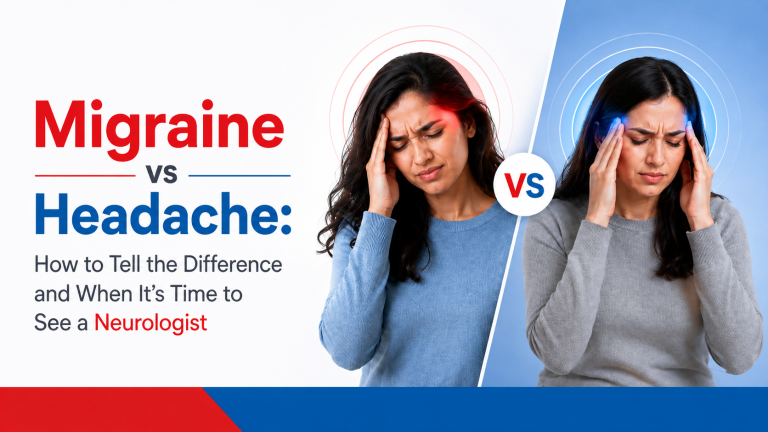
Many people confuse headaches with migraine, stating it as a “bad headache”, but both are quite different and come with their own set of symptoms and treatments.
When you know the correct difference between a migraine and a headache, it helps you find the signs that need urgent care and choose the right relief option.
Difference Between Migraine and Headache
A headache is just a normal pain in the head, which is quite dull and feels like a tight pressure band on your head. It goes away with rest or a simple painkiller. A migraine is a neurological condition that starts as a throbbing pain on one side and is followed by nausea and sensitivity to light and sound. They last longer and disrupt daily life far more than headaches.
Difference Between Migraine and Headache
A headache is just a normal pain in the head, which is quite dull and feels like a tight pressure band on your head. It goes away with rest or a simple painkiller. A migraine is a neurological condition that starts as a throbbing pain on one side and is followed by nausea and sensitivity to light and sound. They last longer and disrupt daily life far more than headaches.
Common Types of Headaches
● Tension Headache: They are dull, steady, and create a band-like pressure on the head. They are the most frequent types of headaches.
● Sinus Headache: This usually comes up with pain and pressure in the forehead, cheeks, and nose. They also sometimes can cause a cold or sinus infection.
● Cluster Headache: They are centered near one eye and cause a sharp stinging pain near that area.
● Medication-overuse Headache: It is also known as a rebound headache, as they come back due to excess use of painkillers.
What Is a Migraine and What Does It Feel Like?
A migraine is a neurological disorder where a person feels intense, throbbing headaches. It often happens on one side of the head and can get worse with movement or when the person walks around or climbs stairs.
You may also experience nausea or vomiting, with a strong sensitivity to bright light, loud sounds, and strong smells. Many people lie down in dark, quiet rooms to feel calmer. An untreated migraine attack can last anywhere from a few hours to about three days, which is why it can force you to miss work or school.
Sometimes just before the migraine attack, some people feel temporary changes in vision or the senses. This is a migraine warning sign and is commonly known as an aura and can show up as flashing lights, zig-zag lines, or fading blind spots. It usually lasts between five minutes and an hour and then fades. Not everyone with a migraine experiences this.
Migraine is a serious condition, and even the World Health Organization believes it to be a leading cause of disability worldwide in young and middle-aged adults. So if you have migraines, it is important to look for proper care and manage them to avoid any future complications.
Four Phases Every Person With a Migraine Goes Through
A migraine attack includes four stages. However, not everyone experiences these exact stages, as the early ones can be quite hard to notice.
1.Prodrome (warning phase): This occurs hours before the actual headache, and you may feel your mood change, have food cravings, and have a stiff neck, followed by frequent urination and attention issues.
2.Aura: In the second stage, you might get vision or sensory changes which may last roughly 5 to 60 minutes.
3.Headache (migraine attack): Here’s where migraine actually begins. This can be followed by nausea and sensitivity to light or sound, which can last from 4 to 72 hours.
4.Postdrome: There is almost no pain but the individual keeps getting some after effects like feeling drained or foggy.
Where Is Migraine Pain Felt?
Migraine pain is normally felt on either side of the head, and sometimes around the temple or forehead.
Migraine vs Headache: Side-by-Side Comparison
| Feature | Tension Headache | Migraine |
| Type of pain | Dull, tight, pressing | Throbbing, pounding |
| Location | Both sides, band-like | Usually one side |
| Severity | Mild to moderate | Moderate to severe |
| Effect of movement | Little change | Gets worse |
| Nausea or vomiting | Rare | Common |
| Light and sound sensitivity | Mild or none | Strong |
| Aura (vision changes) | No | Sometimes |
| Typical duration | 30 minutes to a few hours | 4 to 72 hours |
| Effect on daily life | Can usually carry on | Often forced to stop and rest |
Cluster Headache vs Migraine
Another type of headache people confuse with migraines is cluster headaches. In a cluster headache, a person feels sharp, piercing pain around or behind one eye. The eye here can start to water and go red, with the nostril feeling blocked or runny. The person can even feel restless throughout the day.
They are also short, usually 15 minutes to 3 hours, and happen in clusters, and can come and go several times a day for weeks, at a fixed time. If we compare a migraine to this, they last longer and show up with nausea and light/sound sensitivity.
The treatment for both is different and needs medical care. It is advised to consult a neurologist to differentiate between what you are experiencing and get an accurate diagnosis.
What Are Common Causes of Migraines?
Migraines have always been linked to changes in brain activity, which in turn affect the nerves and blood vessels. They also tend to run in families, so genes play a big part here. Many people who are prone to migraines can trigger one if a particular event happens. Some common ones include:
●Stress, whether it’s emotional or physical.
●Fasting or skipping meals during the day can trigger it.
●Not drinking enough water.
●Irregular sleep.
●Foods and drinks like aged cheese, processed meats, or even alcohol.
To avoid a migraine, you can maintain a headache diary to note down everything you do throughout the day and what triggers a headache.
Is a Migraine Dangerous? When a Headache Is an Emergency
Migraines and headaches can be painful, but they are not that life-threatening. However, sometimes they can be serious, and knowing these warning signs can save your life. If a headache comes with any of the following, you should call emergency right away:
●A sudden, severe headache that peaks within a minute.
●Headache with a stiff neck and fever.
●Weakness, numbness, drooping of the face, confusion.
●Trouble speaking or losing balance.
●Vision loss, double vision, or a seizure.
●A headache that starts after a head injury or accident.
●A new or very different headache during pregnancy, or in anyone over 50.
If you are in doubt, it is always safer to get checked instead of waiting at home.
When to See a Neurologist for Headache
A neurologist is a doctor who diagnoses and treats disorders of the brain and nervous system. You do not need them for a normal headache, but it is important to book a consultation if:
●Your headaches happen several days a month.
●Your headache is getting worse.
●Painkillers no longer work, or you take them very frequently.
●The headaches disturb your work, sleep, or family life.
●The pattern of your headaches has changed.
●You want a proper diagnosis and a long-term plan instead of only treating each attack.
If you want a proper diagnosis, try searching for a “neurologist near me.” If you find a hospital with a dedicated neurology team, choose them, as this will give you access to advanced scans and other specialists.
How Doctors Diagnose and Treat Migraine
A neurologist diagnoses your migraine mainly from your headache history, your triggers, and symptoms you describe. They also conduct a physical and neurological examination to be extra sure.
If they are unsure of anything, they might also do an MRI scan just to rule out other causes. This is why having a clear description of your headaches is so helpful at your first visit. You can do it easily if you maintain a headache diary.
When a neurologist offers you migraine treatment, it usually falls under these two types:
1.Acute Migraine Treatment: This is to stop an attack that has already started. Here, the doctor might prescribe you simple pain relievers, anti-nausea medicine, or a class of drugs called triptans to ease out the migraine pathways in your brain.
2.Preventive Migraine Treatment: This is a long-term treatment plan that can help make the attacks less frequent and milder. This can involve daily medication with some lifestyle suggestions. The doctor shapes the plan around how often your migraines happen.
How Wockhardt Hospitals Can Help
If you face frequent or severe headaches, they deserve more than a temporary prescription fix. At Wockhardt Hospitals, our neurology teams assess your headache and migraine history using evidence-based methods and diagnostic imaging.
The focus is on finding what is triggering those migraines and building a plan you can follow so you can live more normally.
Talk to a Specialist
If migraines or recurring headaches are affecting your daily life, you do not have to simply put up with them. Book an appointment with a neurologist at Wockhardt Hospitals for an accurate diagnosis and a migraine treatment plan suited to you.
FAQs on Migraine vs Headache
1.Are migraines and headaches the same thing?
No. A headache is a symptom, pain in the head. A migraine is a neurological condition that includes head pain plus other symptoms like nausea and sensitivity to light and sound. Every migraine involves a headache, but most headaches are not migraines.
2.How can I tell if my headache is a migraine?
Look at the whole picture. If the pain throbs, sits mainly on one side, gets worse when you move, and comes with nausea or sensitivity to light and sound, it is likely a migraine. A dull, even pressure on both sides that lets you carry on with your day is usually a tension headache.
3.What does a migraine feel like compared to a headache?
A tension headache tends to feel like a tight band squeezing the head, or a steady, dull pressure. Migraine is different; it’s a deep, pounding pain, often paired with a churning stomach and a strong pull to lie down somewhere dark and quiet. It’s also more disabling than a tension headache, and tends to last far longer.
4.Can skipping meals or not drinking enough water lead to a headache?
Yes, it can. Not drinking enough water and missing meals are common triggers for both ordinary headaches and migraines. Regular meals, steady sleep, and good hydration can genuinely reduce how often attacks happen.
5.How long does a migraine last?
An untreated migraine attack can last from about 4 hours up to 72 hours. A tired, foggy “hangover” feeling may linger for a day or so afterwards. Tension headaches usually clear within a few hours.
6.When should I see a neurologist for headaches?
If you get frequent headaches that no longer respond to any painkillers, you must see a neurologist. The professional can help you get the right diagnosis and also create a prevention plan to control any other symptoms.