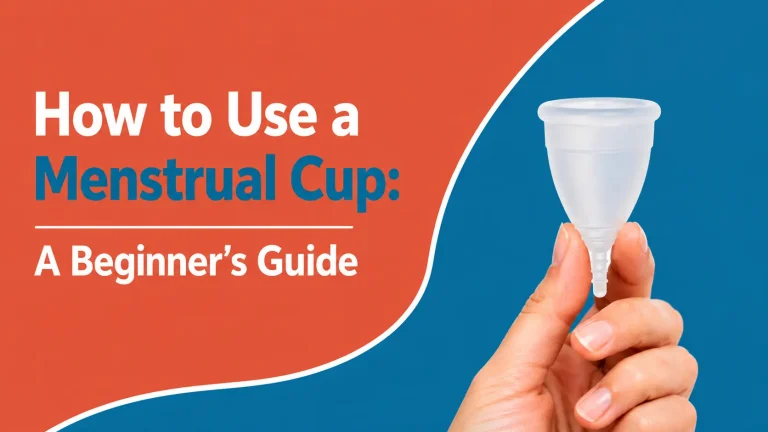
Making the switch to a menstrual cup can genuinely change your period for the better, though there’s no pretending it comes without a learning curve. You already know the perks: reusable, better for the environment, way cheaper over time, and good for up to 12 hours at a stretch. But then there’s the other side, the bit that makes them sound tricky to actually try. If that’s what’s been holding you back, you’re in good company.
It’s completely normal for menstrual cup use to feel unfamiliar when you’re just getting started. Most first-time users need a few attempts before they become comfortable with inserting and removing it.
This guide walks you through how to use a menstrual cup step by step, no complicated stuff: how to pick the right one, fold it, get it in and out, keep it clean, plus a few handy tricks to take the edge off.
What is a Menstrual Cup?
A menstrual cup is a soft, small cup that is made of silicone or rubber and placed inside the vagina. One of the main differences between this device and pads or tampons lies in how they perform their functions, namely, while the latter soaks up the blood, the former just catches it.
The menstrual cup can hold more than a tampon and, hence, can stay inside for up to 12 hours in case of light bleeding. Finally, because the cup does not dry the vagina, a lot of people find it more comfortable to use it after getting accustomed.
What are the Different Types of Menstrual Cups?
Cups aren’t one-size-fits-all, and knowing the basic types makes choosing far less confusing.
- Bell-shaped Cups: This is the most common type of menstrual cup. It is popular with women because it is suitable for a wide range of users.
- Flat or disc-style Cups (Menstrual Discs): These sit higher, tucked up behind the pubic bone near the cervix. Some people swear they’re more comfortable, and they can sometimes be worn during sex, though the removal takes a bit more getting used to.
- Cups with a Stem, Ring, or Ball Base: That’s just the bit you grip to pull it out. A stem works for most, but a ring or flat base is easier to hold on to if your cervix sits low.
- Reusable vs Disposable: The vast majority are reusable for years. A few disc-style ones are single-use.
For everyday menstrual cup use, A soft to medium firmness, bell-shaped menstrual cup is often the best for beginners as it provides a good balance of comfort and ease of insertion.
Which Menstrual Cup is Right for You?
Menstrual cups are available in small, medium, and large sizes, so your first step should be to get the correct size:
- Small Size: Best for newbies, lighter to medium menstrual flow and women under 30 years old without vaginal delivery
- Medium or large sizes: Recommended for heavy flow. For women over 25 to 30 years old and for those who have delivered vaginally
- Position of the cervix. If your cervix is low, you will need a short cup; if it is high, you will need a long cup. You can feel for yourself with a finger during your period.
- Cup stiffness: Softer material feels more comfortable; stiffer ones pop open easier. A moderate level of stiffness is usually best for beginners.
How Should You Prepare and Fold a Menstrual Cup?
A bit of prep makes that first attempt go far more smoothly.
- Wash your hands properly with warm water and mild soap.
- Dab on a water-based lubricant along the rim if you want an easier glide. Steer clear of oil-based ones; they can wreck the silicone over time.
- Fold the cup down small enough to insert. Two beginner-friendly folds do the job nicely:
- The C-fold: Flatten the menstrual cup, then fold it in half so the rim forms a “C” or “U” shape. This simple, widely used fold makes the cup easier to insert.
- The punch-down fold: Push one point of the rim down into the base with a finger, giving you a narrower tip that’s simpler to slide in.
Try a couple of folds in advance so you know which one your hands take to. A glance at a folding diagram or a short video makes it click a lot faster.
How to Use a Menstrual Cup For Beginners: Step-by-Step
This is where many people become anxious, so we will take it slow and steady. Beginner’s guide to inserting a menstrual cup: Get comfortable – squat, sit on the toilet, or put one foot up on the toilet seat and relax the muscles of your pelvis.
- Get comfortable, squat, sit on the toilet, or put one foot up on the toilet seat and relax the muscles of your pelvis.
- Shape the cup into a C shape, and squeeze the sides to make it easier to insert.
- Fold your cup and insert it into your vagina at a 45 Degree angle, towards your tailbone.
- Push it in, and it should pop back out on its own. Run your finger around the edge and see if it is folded over. If needed, rotate the base or gently press the vaginal wall until the cup fully opens and forms a seal.
Missed it the first time? It’s quite okay because research from the Lancet Public Health reveals that it took people a couple of cycles before it became easy for them. The single biggest thing that decides how to insert a menstrual cup successfully is staying relaxed. Calmer body, easier insertion.
How Long Can You Wear It, and How Do You Remove It?
A menstrual cup can stay in for up to 12 hours, depending on your flow. Heavy days may mean emptying it more often; on lighter days, you can leave it the full stretch.
Taking it out is simple once you know the move:
- Wash your hands first.
- Reach in and find the base, not just the stem.
- Pinch the base to break the suction seal. This step is the whole game.
- Ease it out slowly, keeping it level so nothing spills.
One firm rule: never pull it out by the stem before you’ve broken the seal. Pinch the base, release the seal, then bring it down gently. Bearing down slightly with your pelvic muscles nudges the cup lower and within easy reach.
How Do You Clean and Reinsert It?
Mid-period cleaning is quick:
- Pour the fluid into the toilet.
- Rinse your cup thoroughly with clean warm water before placing it again. If you are caught in a public restroom without a sink, you can use clean tissues or bottled water until you can rinse it properly.
- Each cycle should end with a thorough cleaning by boiling it in water for a few minutes in order to sterilize it; let it air-dry completely.
- It is important to sterilize because hygiene is the key to keeping its use safe, and there was no increase in the risk of infections reported in the study.
- During inter-cycle periods, keep it stored in a breathable cotton bag that comes with it, and not in a tightly closed box or plastic bag.
Expert Tips for Beginners
Small things, big difference in those early days:
- Do a Dry Run Before Your Period: A calm practice when you’re not bleeding takes the pressure right off and gets your hands used to folding and inserting.
- Keep Backup Handy at First: A little leaking is common in the first cycle or two while you dial in the angle and seal. A thin panty liner or period underwear buys you peace of mind.
- Trim the Stem if it Bugs You: If it pokes or scratches, trim a little at a time, and only ever while the cup is out. Never with it in.
- Go Easy on Yourself: Comfort with menstrual cup use climbs with every cycle. The fiddly stage passes quickly.
Ready To Try a Menstrual Cup?
Learning how to insert a menstrual cup for beginners can take a few attempts, and that’s completely normal. Give yourself a few menstrual cycles to get comfortable with the process. When you do, you’ll likely enjoy more comfort, save money over the long term, and cut down drastically on period waste.
If you face any ongoing discomfort, pain, or any abnormal symptoms during the use of a menstrual cup, you can visit a gynaecologist at the Obstetrics and Gynecology department at Wockhardt Hospitals, Mumbai, for expert assessment and guidance
FAQs on How to Use Menstrual Cup
1. Is using a menstrual cup painful?
It shouldn’t be. Placed correctly and comfortably, you should not feel it at all. The early pains are due to either tension or incorrect folding. Both will go away with practice. If it still hurts, then it doesn’t suit you in terms of size or material.
2. Do I need any special products to use a menstrual cup?
No, learning how to use a menstrual cup needs very little. Just clean hands, warm water to rinse it, and a water-based lubricant if you’d like easier insertion. Do not use oil-based lubricants as they will damage the silicone. Once your period has finished, boil your menstrual cup in water for a few minutes to sterilise it before putting it away until your next period.
3. Can I leave my menstrual cup overnight?
Yes. As the cup can absorb for 12 hours, it is perfect to use during the night. All you need is to empty and wash it before bedtime and after waking up.
4. Can virgins use a menstrual cup?
Yes. A cup works whether or not you’ve had sex. If you’re brand new to it, a smaller, softer cup plus a little water-based lubricant makes those first tries kinder.
5. How do I know if the cup is sealed correctly?
Feel around the base once it’s in. Round and smooth with no dents, plus a bit of resistance when you gently tug the stem, means it’s sealed. If it feels creased, twist the base or press the vaginal wall to let air in.
6. How often should I sterilize my menstrual cup?
Boil it for a few minutes at the start and end of each period. In between, during your period, a rinse under clean warm water is enough.